
Waterpark Simulator Guide: Best Tips for Building, Managing, and Expanding Your Water Park
Waterpark Simulator is a first-person management simulation game developed by CayPlay Studios. It puts players in charge of building and operating their own water park, combining attraction design, business management, customer service, and chaotic physics-based comedy. Instead of managing everything from a distant control panel, players perform many daily tasks themselves, including selling tickets, serving food, cleaning pools, repairing attractions, and helping guests in trouble. As the park grows, hiring staff and expanding facilities become essential to maintaining a successful operation.
The game stands out because running a water park involves much more than constructing impressive slides. Guests expect clean facilities, enjoyable attractions, convenient food options, and a safe environment. Poor maintenance can damage the park's reputation, while an attractive layout and reliable service can improve customer satisfaction. Players must balance these responsibilities with limited money, research opportunities, and the demands of park expansion.
This guide explores ten practical strategies for progressing through Waterpark Simulator. From establishing an efficient starting layout to improving park ratings, managing employees, designing better slides, and working toward higher prestige, these tips can help you build a more profitable and enjoyable water park.
1. Start With a Small and Functional Park
When beginning a new park, resist the temptation to build a massive resort immediately. Large attractions and elaborate decorations may look impressive, but they can consume your starting budget before you have established a reliable source of income. A smaller park with essential facilities is easier to operate and maintain during the early stages.
Focus on creating a functional guest experience first. Provide access to your initial attractions, organize the entrance and ticket area, and make sure visitors can reach the facilities they need without unnecessary detours. A simple layout also makes it easier to notice problems because guests and staff move through a more predictable environment.
Your first objective should be operational stability rather than visual perfection. Once the park attracts visitors and begins generating money, you can gradually invest in more attractions, food stands, decorations, and additional areas.
Create a Clear Guest Route
Think about how visitors move through your park. They should be able to enter, purchase tickets, reach attractions, and access food or other amenities without constantly crossing through awkward spaces.
A well-organized layout reduces unnecessary walking and makes it easier for you to perform maintenance. Build outward from a working central area instead of filling the entire map before understanding what your visitors actually need.

2. Prioritize Cleanliness and Pool Maintenance
Cleanliness is one of the most important responsibilities in Waterpark Simulator. A water park can contain impressive slides and attractive decorations, but poor hygiene undermines the experience. Dirty pools, litter, puddles, and other messes can create problems that require immediate attention.
During the early game, you will handle much of the cleaning yourself. Develop a regular maintenance routine instead of waiting until the park becomes visibly dirty. Check heavily used areas, clean up messes near attractions, and make sure pool water remains in good condition.
Cleaning also interacts with progression. Performing certain tasks manually can help you earn research points, allowing you to unlock useful improvements. This means early maintenance is not simply an obligation; it can contribute to your future development.
Clean High-Traffic Areas First
Prioritize places where visitors spend the most time, such as pools, walkways, food areas, and entrances. These locations have a direct influence on the overall experience because problems there affect more guests.
As your park grows, invest in suitable tools and staff to reduce the amount of manual work required. A reliable cleaning routine protects your rating and gives you more time to focus on construction and management.
3. Design Water Slides for Fun and Prestige
Water slides are among the main attractions in Waterpark Simulator. Designing them involves more than connecting a starting platform to a pool. The length, shape, height, and arrangement of slide sections can affect how attractive and prestigious an installation becomes.
Begin by learning how the available construction pieces fit together. Experiment with turns, drops, loops, and spirals where the game allows them. These elements can make slides more interesting and help you work toward objectives that require attractions to reach specific prestige levels.
However, construction should remain connected to your park's current needs. Spending heavily on a complex slide before you have stable income can delay other important investments. It is usually better to improve existing attractions strategically before committing to an expensive expansion.
Check Prestige Before Spending
When a progression objective requires a slide to reach a particular prestige level, inspect the attraction's current rating and determine what it still needs. Decorations around the slide may also contribute to prestige, depending on the construction and progression requirements.
Planning around the target can save money. Instead of repeatedly rebuilding an attraction, design it with the desired result in mind and add improvements where they provide the most value.
4. Manage Money and Build Reliable Income
Financial management determines how quickly your park can grow. Ticket sales and food services help generate income, but construction expenses, staff wages, maintenance, and research investments all compete for the same budget.
Avoid spending every available dollar on new attractions. Keep enough money available to handle operational problems and pay for improvements that become necessary as visitor numbers increase. A park that looks impressive but cannot cover its ongoing expenses may struggle to progress.
Food stands can provide another useful source of income. Options such as hot dogs, lemonade, and ice cream give visitors more purchasing opportunities and help create a more complete guest experience. However, each stand needs to justify its cost and staffing requirements.
Expand According to Demand
Build new facilities when your existing park is functioning consistently. If a food stand receives little business or an attraction is not contributing meaningfully to your objectives, adding more of the same may not solve the problem.
Review your finances regularly and identify which investments provide the clearest benefits. Controlled expansion makes it easier to maintain a positive balance while steadily improving the park.
5. Hire the Right Employees at the Right Time
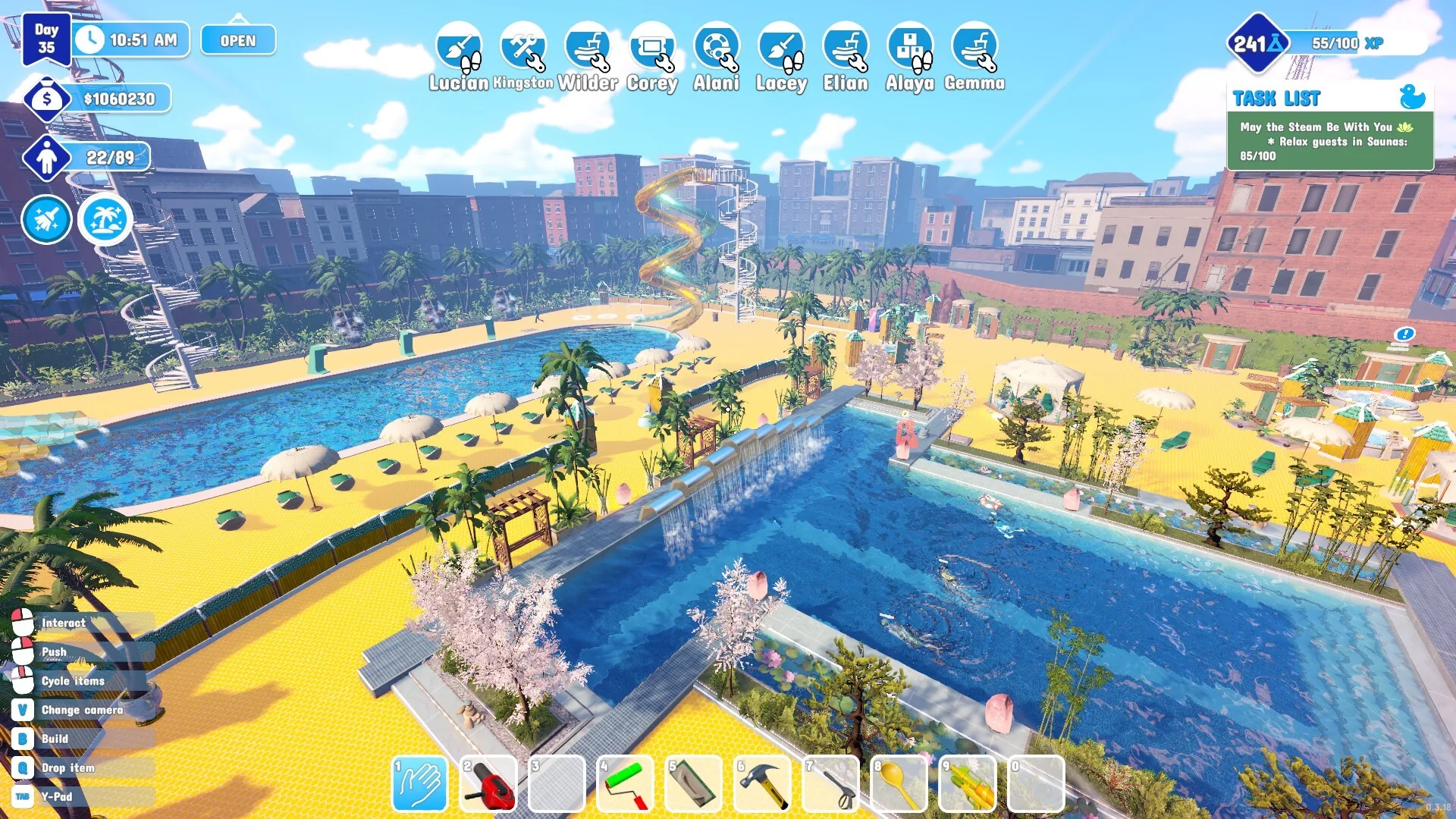
Staff members become increasingly valuable as the park expands. Cleaning, lifeguarding, food service, and other responsibilities can consume a large portion of your time when you attempt to handle everything personally.
Hiring employees allows you to delegate recurring tasks and concentrate on higher-level management. However, staff members create ongoing costs, so recruitment should reflect the park's current needs and financial position.
Prioritize roles that prevent major operational problems. Lifeguards can help address dangerous situations in pools, cleaners reduce the burden of maintenance, and vendors support food services. The exact staffing balance depends on the attractions you operate and the problems you encounter most frequently.
Quality Matters More Than Filling Every Position
Do not assume that hiring the maximum number of employees is automatically the best strategy. Employees with useful capabilities can be more valuable than a large team that costs more than the park can comfortably support.
Begin with the most important roles and expand staffing as demand increases. Once the basic operation is stable, additional employees can free up time for building, research, and larger projects.
6. Earn Research Points and Unlock Useful Improvements
Research provides a path toward better tools, new facilities, and additional management options. It is especially important when a progression objective requires an item or decoration that has not yet been unlocked.
During the early stages, many tasks that generate research are also part of normal park management. Cleaning, maintaining attractions, and completing everyday responsibilities can help you build progress while keeping the park operational.
Rather than spending research points randomly, identify which unlocks support your immediate goals. If you need a particular type of decoration to satisfy a prestige objective, investigate the relevant research branch before spending points elsewhere.
Follow the Requirements of Each Star Level
Progression objectives provide a useful guide to what your park needs next. Check the current task list and distinguish between objectives that require money, construction, decoration, or research.
This prevents unnecessary investment in features that do not help you advance. Research should support your overall development plan, not become a separate activity that consumes resources without producing a practical benefit.
7. Keep Guests Safe and Respond to Emergencies
Guest safety is an essential part of operating a successful water park. Visitors can get into trouble around pools, and broken attractions or poor maintenance may create additional problems. Ignoring emergencies can damage the park's rating and create avoidable expenses.
During the early game, you may need to respond directly to incidents. Learn where your essential tools are located and understand how to use them when a visitor needs help. As the park becomes larger, staff members become increasingly important for keeping operations manageable.
Regular maintenance is also a form of prevention. Inspect attractions, repair damage promptly, and address hazards before they create larger problems. Preventing an incident is usually easier than dealing with the consequences after it occurs.
Combine Safety With Routine Maintenance
Do not treat emergencies as completely separate from everyday management. A regular inspection routine can help you identify broken equipment, unsafe areas, and other issues before they affect visitors.
As your operation grows, allocate staff and resources to the areas that need the most attention. A well-maintained park is easier to manage and provides a stronger foundation for future expansion.
8. Improve Guest Satisfaction With Food and Amenities
Visitors expect more than a collection of water slides. Food, convenience, cleanliness, decorations, and other amenities help shape their overall experience. A park that provides a variety of useful services can feel more complete and encourage guests to spend more time there.
Food stalls are a practical place to begin. Offer different products where appropriate and place stalls in locations visitors can reach easily. A poorly positioned stand may be less convenient even if its products are appealing.
Decorations also matter because they help establish the identity of your park and can contribute to progression requirements. You can experiment with different visual themes, colors, and layouts to make individual areas feel distinctive.
Build Around Visitor Needs
Think about the full guest journey rather than focusing exclusively on attractions. Visitors need to enter the park, enjoy activities, find refreshments, and move between facilities without unnecessary inconvenience.
Add amenities where they improve the experience. Expanding every service at once is rarely necessary; a thoughtful arrangement of useful facilities can be more effective than a large but poorly organized collection of buildings.

9. Use Decorations and Themed Areas Strategically
Customization is one of the enjoyable aspects of Waterpark Simulator. You can develop a distinctive visual identity through colors, signage, flooring, props, and themed attractions. These creative choices can also support objectives related to decoration and prestige.
Before decorating a large area, consider the theme you want to establish. A coherent design can make the park feel more intentional than placing unrelated objects wherever space is available. You can create separate areas for relaxing pools, high-energy slides, food services, or themed attractions.
Decoration should be balanced against operational priorities. Early in the game, essential facilities and reliable income are more important than covering every available surface with decorative objects. As finances improve, you can invest more heavily in visual customization.
Decorate With a Purpose
When an objective requires decorations with a certain prestige level, choose items that help meet the requirement instead of purchasing random props. Check the relevant progression information before committing your budget.
This approach allows you to improve the park's appearance while making measurable progress toward your goals. It also reduces the risk of spending money on decorations that do not contribute to the objective you are trying to complete.
10. Expand Toward a Five-Star and Diamond-Rated Park
Long-term progression involves transforming a basic water park into a more developed resort. As you complete objectives, you can unlock new opportunities, expand into additional areas, improve attractions, and develop more advanced facilities.
The key is to follow the progression system rather than expanding without direction. Each stage may require a combination of earnings, attractions, decorations, and research. Review these requirements regularly so you know which improvements deserve priority.
Higher ratings demand more than simply attracting large numbers of visitors. A successful park needs reliable operations, clean facilities, enjoyable attractions, and appropriate investment in its infrastructure. Once the basics are stable, you can focus on more ambitious designs and prestige targets.
Build for Sustainable Growth
Avoid making a major expansion just because you have enough money to purchase it. Consider whether the new attraction can be maintained, whether the park has enough staff, and whether existing facilities can support additional visitors.
A steady progression strategy is more reliable than rapid construction followed by expensive repairs. By improving one part of the park at a time, you can create an operation that is both visually impressive and financially sustainable.
Waterpark Simulator combines creative construction with hands-on business management. Building impressive slides is only one part of the challenge; long-term success also depends on cleanliness, guest safety, financial planning, research, employee management, and thoughtful expansion.
Start with a compact park that offers essential attractions and services. Maintain clean pools, manage your budget, and learn which construction choices improve prestige. As your income grows, hire employees to handle recurring responsibilities and invest in research that supports your current objectives.
Most importantly, expand with a clear purpose. A successful water park is not necessarily the largest one, but the one that consistently meets visitor needs while generating enough income to improve its facilities. By combining creative design with disciplined management, you can gradually develop your park into a highly rated destination.