
Red Light, Wrongside Out: When Poppy Playtime Turns Childhood Games Into Nightmares
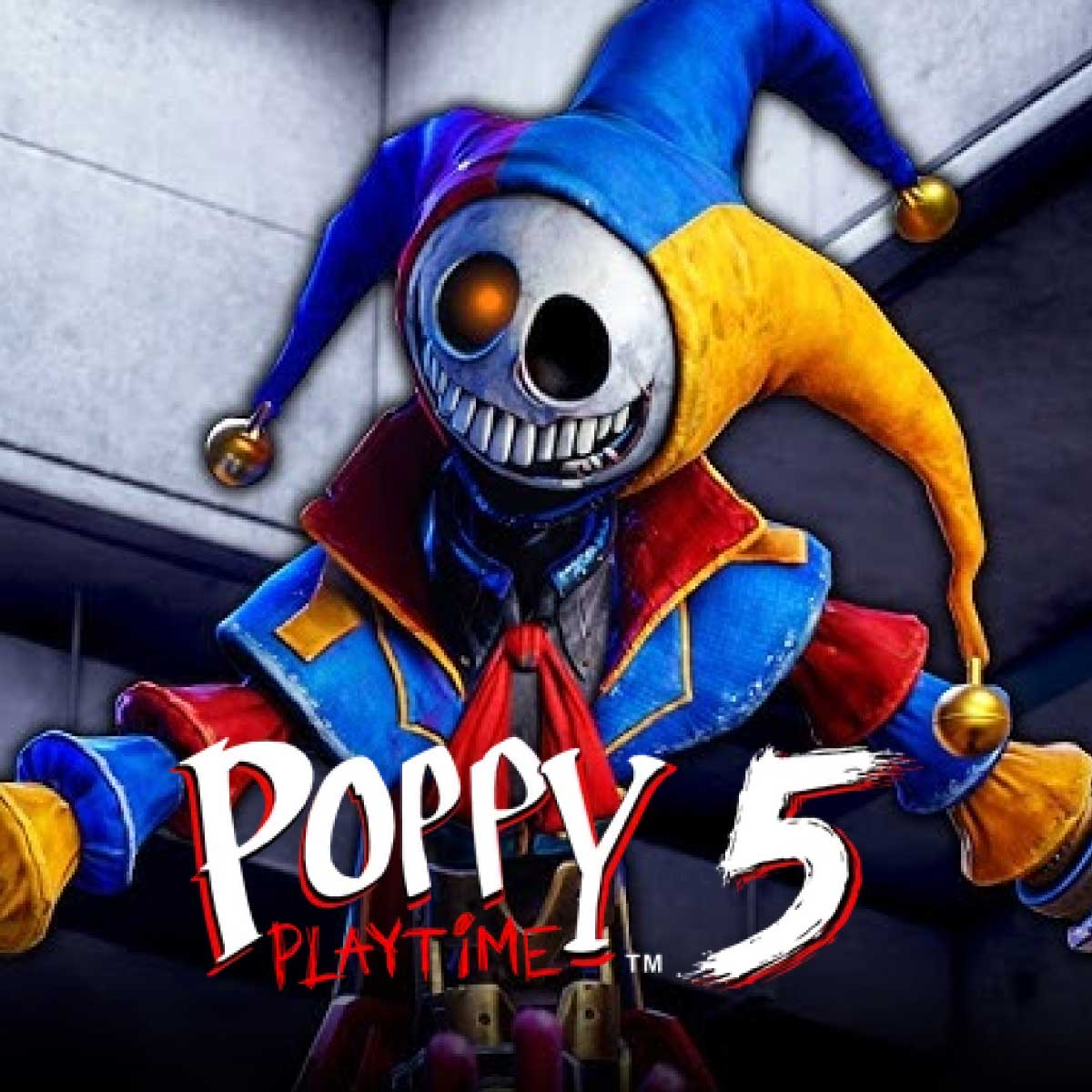
Remember playing hide-and-seek as a child? The excitement of finding a hiding spot, the anticipation of being discovered, and the laughter when someone finally shouted your name?
Now imagine playing that game inside an abandoned toy factory, where the thing searching for you is a giant blue monster with absolutely no interest in playing fairly.
Welcome back to Playtime Co.
Poppy Playtime: Chapter 5 – Broken Things takes one of the franchise's most recognizable ideas and pushes it further: turning familiar elements of childhood entertainment into experiences that feel increasingly dangerous. Here, cheerful toy commercials hide disturbing details, seemingly friendly characters have unsettling personalities, and games that should be harmless become tests of survival.
From the relentless pursuit of Huggy Wuggy to Lily Lovebraids' twisted games, Chapter 5 explores a particularly uncomfortable idea: what happens when the things designed to entertain children become the very things they should fear?

1. The Commercial That Makes You Question Your Childhood
Every great toy needs a commercial.
Bright colors, cheerful music, enthusiastic voices, and children enjoying the newest product. It is a familiar formula designed to make an ordinary toy look like the most exciting thing in the world.
Poppy Playtime understands how to weaponize that familiarity.
Chapter 5 introduces the Wrongside Outimals through a Playtime Co. promotional commercial. At first, the concept sounds like another ridiculous toy franchise: adorable plush characters that can be turned inside out to reveal another form.
But the commercial quickly becomes disturbing as its cheerful presentation gives way to much darker imagery. <Cite refs={["turn544577search1"]}/>
That contrast is what makes the sequence effective.
The product is presented as something fun and imaginative, yet the imagery suggests that something is terribly wrong behind its creation.
It also establishes the chapter's central visual theme: appearances can be misleading.
A cute toy may have a disturbing second side. A cheerful advertisement may conceal something horrific. Even a familiar children's product can become uncomfortable once you understand what you are looking at.
The commercial does not need to explain everything.
It only needs to make you wonder why a company selling toys would want children to see something like this.
2. Huggy Wuggy Has Completely Forgotten the Rules of Hide-and-Seek
There is something uniquely frightening about being hunted by something that is much faster, stronger, and more dangerous than you.
Huggy Wuggy brings that feeling back in Chapter 5.
The story continues with the player facing a pursuing Huggy Wuggy inside the factory. His role as Playtime Co.'s security system makes the encounter especially disturbing: the factory's own mascot has become one of the greatest threats to anyone trying to survive it. <Cite refs={["turn544577search0","turn544577search1"]}/>
The opening encounter establishes an immediate change in pace.
One moment, you are trying to understand the environment. The next, you are desperately searching for somewhere to go while Huggy closes the distance.
These chase sequences work because they turn the environment into part of the threat. Doors, corridors, machinery, and obstacles are no longer simply pieces of scenery. They become elements that can determine whether you escape or get caught.
There is also a psychological difference between exploring a room and knowing something is actively looking for you.
When the environment feels empty, you can take your time. When Huggy is nearby, every second becomes more valuable.
Suddenly, the safest strategy is no longer curiosity.
It is getting out.
3. Lily Lovebraids: The Host of the World's Worst Children's Show
A children's television host is supposed to be cheerful, welcoming, and entertaining.
Lily Lovebraids takes those expectations and turns them into something much more sinister.
Rather than behaving like a conventional monster that simply attacks whenever the player enters a room, Lily introduces a different kind of threat: she wants the player to participate in her games.
Chapter 5 features encounters in which Lily forces the player into activities such as Red Light, Green Light, turning a familiar childhood game into a tense survival challenge. <Cite refs={["turn544577search1"]}/>
The concept is unsettling because the rules are familiar.
You already understand what Red Light, Green Light is supposed to be. You know when to move and when to stop. You recognize the basic structure without needing an explanation.
But familiarity does not make the situation safe.
The fear comes from the possibility of making one small mistake while dealing with an opponent who controls the situation.
Lily's personality adds another layer to the experience. Her voice can shift between the polished enthusiasm of a children's entertainer, manic laughter, and frightening outbursts. <Cite refs={["turn544577search1"]}/>
That contrast makes her particularly memorable.
She is not simply a character who looks frightening. She performs innocence in a way that makes it feel unnatural.
You might expect a friendly host to invite you to play.
You probably would not expect to regret accepting the invitation.
4. Glowby: The Unexpected Friendship You Didn't Know You Needed
Horror games often make players feel isolated. The environment becomes unfamiliar, threats are difficult to predict, and even the smallest sound can create suspicion.
Chapter 5 introduces an unusual companion that changes the atmosphere slightly: Glowby.
After losing the GrabPack during the early events of the chapter, the player gains access to this small, star-shaped character. Glowby is more than a flashlight. It also offers blacklight functionality that reveals hidden messages and visual details, while allowing players to listen to audio tapes without interrupting exploration. <Cite refs={["turn544577search1"]}/>
Its screen-based expressions also give it a surprising amount of personality.
It can react to discoveries, respond to nearby threats, and display different expressions depending on the situation.
This creates an interesting contrast with the factory's more intimidating inhabitants.
Glowby is small, expressive, and comparatively reassuring. It does not remove the danger, but it provides a little personality in an environment filled with characters that are difficult to trust.
There is something oddly comforting about having a tiny star-shaped companion accompany you through a place where practically everything else wants to ruin your day.
And perhaps that is the most unexpected achievement of Glowby.
It makes a horror adventure feel just a little less lonely without making it any less dangerous.
5. The Wrongside Outimals: Cute on the Outside, Something Else on the Inside
The Wrongside Outimals are built around a simple but fascinating idea: toys that can be turned inside out to reveal a different appearance.
That concept fits perfectly into the visual identity of Poppy Playtime.
The franchise has always enjoyed playing with the relationship between familiar toy designs and unsettling transformations. Chapter 5 takes that idea in a particularly memorable direction.
The Wrongside Outimals look like characters that could easily belong to a colorful children's product line. Yet their appearance and the circumstances surrounding their creation make them feel much less innocent.
The contrast is especially effective because the player is already familiar with the visual language of Playtime Co.
A cute character is not automatically trustworthy. A friendly appearance does not guarantee friendly intentions. And something that appears harmless may have a completely different side waiting to emerge.
The chapter also introduces Giblet and Chum Chompkins, two characters who help the player navigate the factory after the early encounter with Huggy. <Cite refs={["turn544577search1"]}/>
Their presence brings a different energy to the adventure.
Instead of facing every situation alone, the player has companions who add dialogue, personality, and another dimension to the world.
But this is still Poppy Playtime.
You should probably avoid getting too comfortable.
6. Losing Your GrabPack Is Like Losing Your Entire Personality
The GrabPack has always been one of the most recognizable gameplay elements in Poppy Playtime.
It is not simply a tool that allows players to interact with objects. It shapes the way they understand and manipulate the environment.
That is why the early loss of the GrabPack in Chapter 5 feels significant.
After Huggy Wuggy takes the equipment, the player is forced to continue without the familiar tools that previously made exploration possible. The experience becomes a reminder of how dependent they are on the equipment they have been carrying. <Cite refs={["turn544577search1"]}/>
It changes the relationship between the player and the factory.
Previously, certain environmental obstacles could be approached with the expectation that the GrabPack would provide a solution. Without it, the player must temporarily adapt to a more vulnerable situation.
The chapter eventually introduces new equipment and functionality, expanding the way the player interacts with environmental puzzles.
These include new hand abilities and magnetic equipment that create additional possibilities for navigating obstacles and manipulating the environment. <Cite refs={["turn544577search1"]}/>
The result is a progression that feels connected to the story rather than simply handing the player another upgrade.
You are not becoming powerful because you found a better weapon.
You are learning how to survive in a place that keeps taking away the things you rely on.

7. The Factory's Puzzles Are Basically Extremely Unfriendly Playgrounds
A playground is usually designed around movement, experimentation, and problem-solving.
Poppy Playtime takes some of those ideas and places them inside an environment that clearly does not want you there.
Chapter 5's environmental puzzles make use of different GrabPack abilities, machinery, platforms, electrical systems, and other interactive elements.
Players may need to combine their tools in different ways to restore power, manipulate mechanisms, or access new areas. <Cite refs={["turn544577search1","turn544577search7"]}/>
What makes these puzzles interesting is how they contribute to the feeling of being inside a functioning industrial environment.
You are not simply solving abstract puzzles displayed on a screen. You are interacting with machines and systems that appear to belong to the factory itself.
That creates a sense of physical connection with the setting.
A platform needs to move. A machine needs power. A door refuses to open until the correct mechanism is activated.
Each problem gives the player another reason to examine the environment carefully.
Some solutions are straightforward, while others require experimenting with different combinations of abilities.
The challenge is not always about finding the most complicated answer.
Sometimes, it is about noticing that an ordinary-looking machine is actually the key to moving forward.
8. The Scariest Sound Is Sometimes the One You Recognize
Horror games rely on visual threats, but sound can create an entirely different kind of tension.
A strange noise can make an empty corridor feel dangerous. A sudden change in music can signal that something is approaching. A familiar voice can become unsettling when it is heard in the wrong context.
Chapter 5 makes strong use of its audio presentation.
Its sound design and voice performances help establish the personalities of its characters, particularly Lily Lovebraids, whose dramatic vocal changes contribute heavily to her unsettling presence. <Cite refs={["turn544577search1"]}/>
This is an important part of what makes the factory feel alive.
The player is not only observing the environment. They are constantly receiving information through sound.
A character's voice can communicate personality and intention. Ambient audio can create anticipation. A sudden change in the atmosphere can make an otherwise ordinary room feel threatening.
Even the silence between encounters can become meaningful.
You may find yourself listening carefully because you are unsure what will happen next.
And once you become accustomed to expecting something frightening, even a familiar sound can make you nervous.
That is when a horror game has successfully changed the way you experience its world.
9. Collecting Toys in a Place Where Toys Are the Problem
A strange part of Poppy Playtime is that its world constantly encourages curiosity.
There are hidden areas, notes, audio recordings, collectibles, and other details that reveal more about the environment.
Chapter 5 continues this tradition with additional collectibles and secrets, including Wrongside Outimal-related discoveries and optional exploration content. <Cite refs={["turn544577search1"]}/>
This creates an amusing contradiction.
The player is exploring a factory full of dangerous toys, yet they are also encouraged to search for more toys to collect.
It is as though the factory has become both a survival challenge and the world's least sensible collectible store.
But these discoveries serve an important purpose.
They reward players who pay attention to their surroundings instead of rushing directly toward the next objective. Optional areas may contain additional information, visual details, and small discoveries that make the world feel richer.
There is also a different kind of satisfaction in finding something hidden.
A chase sequence demands immediate reactions. A collectible rewards patience. A dangerous encounter tests your ability to survive, while exploration encourages you to slow down and investigate.
The combination creates a more varied experience.
You might spend one moment running for your life, then immediately find yourself examining an unusual object because curiosity has once again become stronger than common sense.
10. When Playtime Is No Longer Fun
The most interesting idea behind Poppy Playtime: Chapter 5 is not simply that toys have become frightening.
It is that the meaning of play itself has changed.
Games are normally associated with freedom. Players participate because they want to, rules exist to create enjoyment, and losing is usually part of the experience.
Chapter 5 repeatedly challenges that expectation.
Lily Lovebraids turns familiar activities into dangerous encounters. Huggy Wuggy transforms movement through the factory into a desperate escape. Environmental puzzles make ordinary machinery into obstacles that must be understood before the journey can continue.
Even the toys themselves challenge the idea that something designed to entertain must be harmless.
The chapter plays with childhood nostalgia, but it does not treat nostalgia as something comforting.
Instead, it asks what happens when familiar experiences are removed from their original context.
A game of Red Light, Green Light becomes frightening when the consequences of moving at the wrong moment are no longer harmless. A children's commercial becomes disturbing when its imagery reveals something unexpected. A friendly toy becomes suspicious when its behavior no longer matches its appearance.
The horror comes from recognizing something familiar and realizing that it no longer belongs in a safe world.
Conclusion: The Last Thing You Should Do Is Agree to Play
Poppy Playtime: Chapter 5 – Broken Things takes the franchise's familiar combination of toy horror, environmental puzzles, and intense chase sequences and gives it a particularly interesting thematic direction.
Its world is filled with uncomfortable contradictions. Huggy Wuggy is a familiar mascot that becomes an unstoppable threat. Lily Lovebraids turns children's entertainment into a dangerous performance. The Wrongside Outimals challenge the idea that cute toys are always innocent, while Glowby offers a surprisingly charming companion in an otherwise hostile environment.
The new GrabPack abilities and environmental puzzles make exploration more involved, while the characters and audio presentation give the adventure a stronger sense of personality.
But what makes Chapter 5 memorable is the way it transforms childhood entertainment into something unsettling.
The factory still looks like a place built around toys. Its characters still resemble things that could belong in a children's show. Its games still follow rules that many people recognize.
The difference is that nobody is laughing anymore.
And somewhere inside Playtime Co., someone is still waiting for you to play another round.