
Precision Chromatic Stealth Engineering: The Master Guide to Visual Camouflage, Kinetic Traversal, and Mission Execution in Meccha Chameleon

Meccha Chameleon evolves the stealth-action puzzle genre into a high-stakes simulation of dynamic optical camouflage, active environmental pattern matching, and momentum-driven kinetic traversal. Far from a passive hide-and-seek game, the title demands that players assume total control over a cybernetic chameleon capable of shifting its skin textures in milliseconds while executing precise tongue-tethers across dangerous multi-tiered arenas. Beginners often make the mistake of playing defensively—hiding in corners or waiting for guard patrol routines to reset. However, true mastery of Meccha Chameleon requires adopting a relentless, proactive doctrine where real-time chromatic adaptation is seamlessly integrated with aggressive grappling mechanics to break enemy sightlines mid-sprint.
Achieving peak performance in this title requires an exhaustive understanding of how the game's dynamic lighting engine, surface texture sampling, and tongue-anchor physics interlock. A single frame of misaligned skin polarity or a poorly calculated tongue trajectory will instantly alert high-frequency infrared sensors, triggering sub-second lockdown alarms and heavy combat dispatches. This comprehensive technical guide breaks down the precise step-by-step methodology for executing zero-detection runs across high-security facilities. By mastering the sequence of active surface scanning, chromatic phase-shifting, tongue vectoring, and thermal dampening detailed below, you will learn how to transform your cybernetic reptile into an untraceable, high-speed shadow.
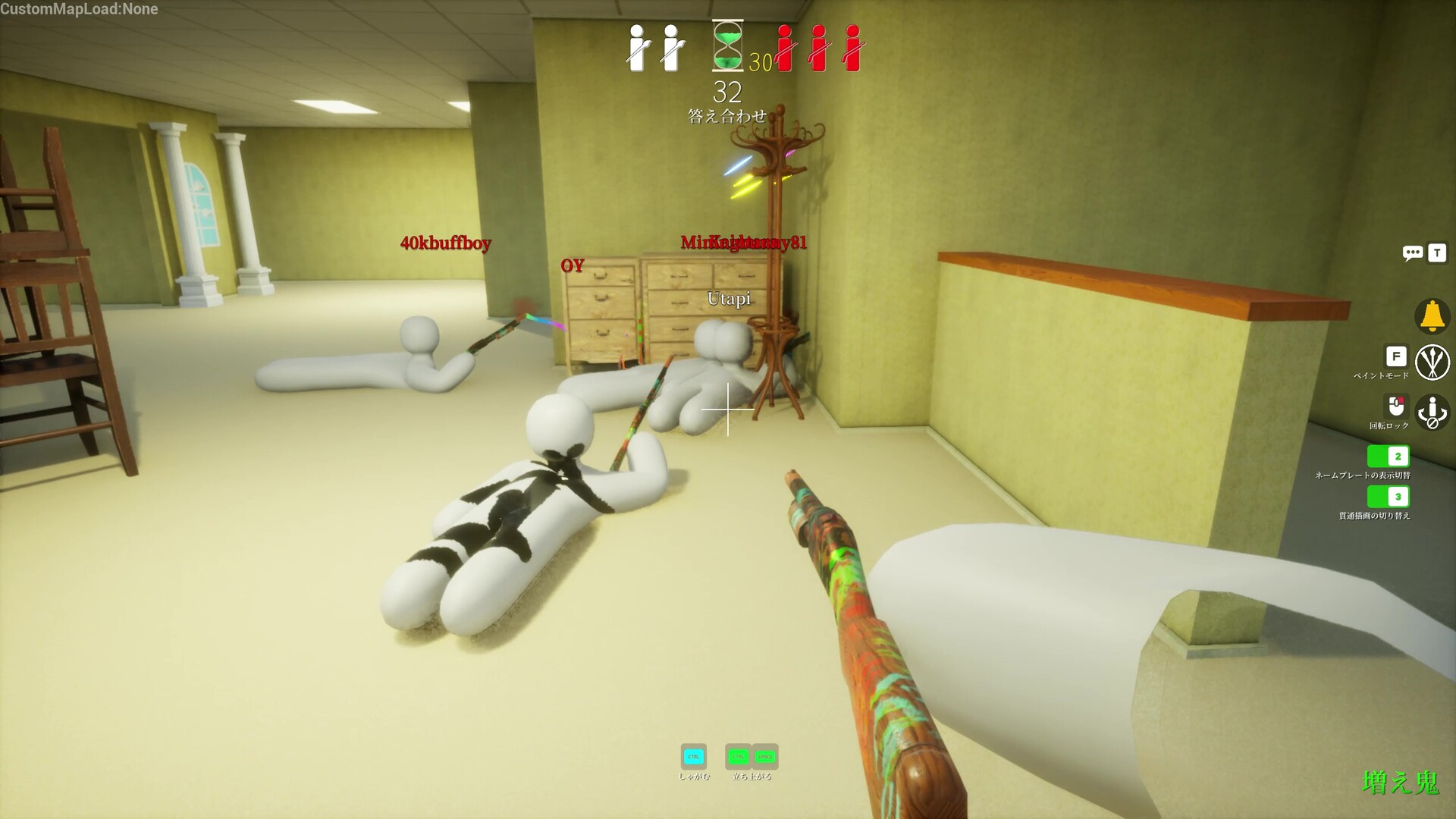
1. How to Calibrate the Optical Core: Setting Active Camouflage Polarity and Color Sampling Sensitivity
Before stepping onto the high-security floors of Meccha Chameleon, you must properly calibrate your chameleon's Optical Camouflage Core within the systems configuration menu. The game’s detection engine relies on a real-time visual contrast algorithm, calculating your visibility percentage based on the color, reflectivity, and pattern alignment between your skin matrix and the immediate background surface. Begin by adjusting your Chromatic Sampling Rate to its maximum frequency, ensuring that your optical skin samples environmental textures every 2 milliseconds rather than defaulting to static polling intervals.
Static background calibration forms the foundational layer of your stealth capability. Never attempt to cross distinct visual zones—such as moving from brushed steel flooring onto a vibrant neon wireway—without pre-buffering your secondary skin memory bank. Using the Optical Probe tool, scan the primary background textures along your planned route before moving, locking their RGB color values and material noise patterns into your quick-switch palette slots. Set your Color Blend Threshold to 0.05 to ensure smooth gradient shifts that prevent harsh visual borders along your character model during rapid movement.
2. How to Master Chromatic Phase-Shifting on Moving Surfaces and Dynamic Textures
Transitioning across dynamic environments—such as rotating conveyor belts, pulsing laser grids, or moving security platforms—requires mastering the active Chromatic Phase-Shift technique. Unlike stationary camouflage, phase-shifting forces you to continually adjust your skin's color phase in direct synchronization with moving background textures. To perform a flawless phase-shift, approach the dynamic surface, open your optical sampling wheel, and lock onto the surface's velocity vector before jumping.
As your chameleon lands on the moving surface, match your skin's texture scrolling speed to the exact surface velocity. If you land on a conveyor belt moving at 5 meters per second to the right, your active skin pattern must scroll to the left at precisely 5 meters per second relative to your body. This counter-scrolling effect creates a visual lock-in where stationary security cameras perceive no moving edge or pattern displacement, treating your character as an uninterrupted continuation of the moving surface itself.
To eliminate brief detection spikes during sudden surface jumps—such as leaping from a dark concrete pillar onto a glowing blue glass walkway—you must utilize the Pre-Shift Buffer mechanic. Trigger your secondary skin slot 100 milliseconds before your feet leave the ground. This initiates a mid-air chromatic morph that completes at the exact frame of contact, ensuring that your visibility meter never spikes above the critical 5% threshold during air travel between different texture zones.
3. How to Execute Kinetic Tongue Tethering: Vector Trajectories, Tensile Locks, and Momentum Swings
The cybernetic tongue in Meccha Chameleon is not merely an interaction tool for grabbing distant items; it is your primary engine for high-speed, vertical mobility. Tongue mechanics operate on a realistic Newtonian physics model governed by hook distance, cable tension, launch velocity, and angular momentum. To launch a successful tongue tether, point your targeting reticle at a solid anchor point—such as an overhead steel girder, pipe joint, or concrete overhang—and verify that the anchor reticle turns solid cyan, confirming a valid grip surface.
Once anchored, the length of your tongue cable determines your swing arc and tangential velocity. To execute a maximum-distance momentum swing across a guarded corridor, fire the tongue at a 45-degree forward angle while running at full speed. As the tongue latches, press the Contract Tension button to pull your body inward toward the anchor point, converting linear horizontal speed into high-velocity rotational energy. Release the tether precisely at the lowest point of your arc to launch yourself forward along a flat, low-profile trajectory.
To avoid triggering acoustic sensors mounted along walls and ceilings, you must manage cable release shock. Never allow the tongue to snap back violently when detaching. Instead, integrate a Dampened Reel Release by tapping the cushion key at the moment of release. This smooths out the tension release curve, eliminating the loud structural "clack" that occurs when an unmitigated mechanical cable retracts under full tension, keeping surrounding guards completely unaware of your airborne trajectory.
4. How to Perform Precision Surface Anchoring: Silent Ceiling Hangs and Inverted Stalking
Bypassing heavy floor-level security forces often requires moving completely off the horizontal plane by climbing walls and anchoring to ceiling trusses. Meccha Chameleon features specialized micro-suction pads on all four limbs that allow you to adhere to virtually any smooth or textured surface, including inverted planes. To initiate a wall cling, sprint toward a vertical surface and press the Grip Lock button within 0.5 meters of impact, seamlessly transferring your momentum from horizontal running to vertical climbing without losing speed.
Inverted ceiling hangs present unique stealth challenges due to overhead lighting and directional guard vision cones. When hanging upside down directly above a guard patrol route, your belly texture becomes your primary visual profile. Before ascending to a ceiling track, ensure your ventral (underside) skin palette is matched to the exact color and light level of the ceiling tiles, while your dorsal (back) skin matches the surrounding structural shadows. This split-tone camouflage ensures complete invisibility from both bottom-up lookouts and top-down security cameras.
5. How to Exploit Environmental Light, Shadow Zones, and Thermal Blind Spots
Light is both your greatest threat and your most powerful asset in Meccha Chameleon. The game features dynamic real-time ray-traced illumination, where light sources bounce off surfaces, creating variable glare, harsh cast shadows, and subtle ambient bounce lighting. Understanding how light levels modify your base camouflage rating is essential: standing in direct high-lux sunlight requires a 99% skin accuracy match to stay hidden, whereas resting inside a low-lux shadow grants a massive 40% margin of error on your skin color calibration.
To navigate heavily illuminated security corridors, you must learn to read and exploit "shadow bridges"—connecting paths formed by the cast shadows of moving machinery, ceiling beams, or environmental structures. Map out the movement timing of overhead crane shadows or rotating fan blades. By matching your movement speed to the travel rate of these shadow bridges, you can cross open, highly lit room floors while remaining completely encased in mobile darkness, preserving your stealth meter without spending energy on complex active camouflage shifts.
Advanced facilities deploy infrared (IR) searchlights and thermal imaging cameras that ignore standard visual camouflage entirely. To counter thermal optics, you must activate your chameleon’s internal Heat Sink Core. Engaging the Heat Sink reroutes internal mechanical heat into localized thermal storage cells, dropping your external skin temperature to match ambient room temperature. Keep a close eye on your Heat Storage Meter; if the cells overheat, your chameleon will automatically vent excess heat in a massive thermal bloom, blinding your optical sensors and instantly alerting every thermal security unit in the area.
6. How to Deploy Tactical Distractions via Tongue-Snaps and Environmental Sabotage
When guard patrol routes overlap tightly, creating impenetrable security bottlenecks, you must actively break their patterns using tactical environmental distractions. Your cybernetic tongue serves as an exceptional long-range distraction tool when used to manipulate distant interactive objects. Firing your tongue at a distant wall-mounted light switch, loose metal can, or emergency alarm glass panel allows you to lure guards away from their posts without ever exposing your location.
To execute a Precision Tongue-Snap Distraction, target a loose environmental object—such as an empty oil drum or tool box—located 15 to 20 meters away from the target guard. Rapidly flick your tongue to strike the object, imparting a small physical impulse that causes it to clatter loudly against the floor. The acoustic disturbance triggers an immediate investigation sub-routine in nearby guard AI, forcing the guard to leave their post and march toward the noise source, opening a clean 10-to-15 second traversal window through their former watch post.
For high-tech security zones covered by automated turret networks, use your tongue to break ambient light fixtures. Target overhead glass light bulbs or circuit breaker boxes with a heavy tongue whip. Shattering the light source instantly plunges the immediate zone into total darkness, disabling visual security cameras, causing turrets to revert to blind sweep modes, and granting you a massive stealth advantage as your skin automatically shifts into ultra-low-light black absorption patterns.
7. How to Manage Synthetic Energy Economies: Overdrive, Damping, and Power Reserves
Every advanced capability in Meccha Chameleon—from active color-shifting and thermal cooling to high-speed tongue launches—draws power from a shared, rechargeable Synthetic Energy Core (SEC). Operating your systems carelessly will drain your battery reserves rapidly, leaving you vulnerable in the middle of a heavily guarded room with static, non-camouflaged skin. Effective energy management requires balancing passive energy regeneration against active power draw during high-intensity maneuvers.
Active camouflage draw scales non-linearly based on the complexity of the pattern being matched. Displaying a simple flat gray concrete texture consumes minimal power (1.2 Watts/sec), while rendering a complex moving neon reflection or high-reflectivity chrome texture forces your skin processor into Overdrive Mode, drawing up to 15.0 Watts per second. To conserve power along extended routes, toggle off active camouflage when traveling inside total darkness or within ventilation shafts, allowing your SEC to recharge naturally to 100% capacity before you re-enter illuminated danger zones.
When rapid movement is required to bypass a failing security gate, execute an Energy-Budgeted Burst. Simultaneously engage Muscle Boost (doubles sprint speed and jump distance) and Camouflage Overdrive for a maximum of 2.0 seconds. This short, high-power burst consumes roughly 35% of your total energy reserve but allows you to cross massive open security arenas in the blink of an eye, clearing the hazard zone before your battery drains completely and forces a system reboot.
8. How to Troubleshoot Optical Glitches, Tracking Locks, and Alarm Escalations
Even the most careful stealth plans can encounter unexpected complications. In Meccha Chameleon, errors manifest as Optical Glitches (skin tearing, color flickering, or pattern lag), active thermal tracking locks from elite hunter drones, or escalating facility-wide Alarm Heat Levels. Systematically identifying and resolving these tactical failures in real time is the difference between recovering your stealth run and meeting a swift termination.
Optical Glitches occur when you take physical damage, pass through electromagnetic pulse (EMP) fields, or shift skin patterns too rapidly across contrasting surfaces. Glitches cause your skin to flash neon-pink error pixels for several seconds, instantly exposing you to all nearby visual sensors. To resolve an optical glitch, immediately retreat into a dark corner or shadow zone, hold down the System Purge button for 1.5 seconds, and flush your skin processing buffer to restore normal color matching capabilities.
When an elite Hunter Drone detects your presence and locks on with a locking beam, you have less than 1.0 second to break line-of-sight before a facility-wide lockdown triggers. Do not attempt to run away in a straight line; the drone's tracking optics will follow your movement regardless of speed. Instead, launch a high-velocity tongue tether at a nearby corner or vertical duct, reel yourself around the obstruction instantly to break the optical beam, and immediately engage active thermal dampening to dissolve your tracking signature before the drone rounds the bend.
9. How to Execute Multi-Vector Infiltrations across 3D Arenas
Moving beyond basic room clearance requires integrating all your traversal skills into a continuous, fluid multi-vector infiltration sequence. A multi-vector sequence links ground sprinting, wall-clinging, tongue-swinging, and ceiling-stalking into a single unbroken movement flow that navigates complex three-dimensional room geometry without pausing or touching detection zones.
To plan a flawless three-dimensional infiltration route, execute the Scan-Plan-Execute Protocol upon entering any new security sector. Use your high-perch vantage point to scan the room with your dual-independent eyes. Lock your left eye onto floor-level guard patrol paths, while sweeping your right eye across ceiling rafters, ventilation access grates, and camera vision cones. Identify three primary momentum nodes across the room: Node Alpha (Wall Cling point), Node Beta (Overhead Pipe Tongue Swing), and Node Gamma (Ceiling Vent Exit).
Execute the sequence by sprinting off your starting ledge, snapping your skin to match the air/background glare during the jump, latching onto Node Alpha with a silent wall-grip, instantly launching a tongue tether upward to swing through Node Beta, and detaching at the swing's apex to land directly inside Node Gamma's ceiling vent. By maintaining high kinetic speed throughout the entire sequence, you move faster than enemy AI vision cones can rotate, effectively rendering yourself invisible through sheer speed and spatial agility.
10. How to Master High-Security Facilities: Quantum Labs, Neon Vaults, and Orbital Arenas
The campaign of Meccha Chameleon culminates in extreme endgame security environments that push all core mechanics to their absolute limit. Facilities like the Quantum Research Labs, Neon Cyber Vaults, and Zero-G Orbital Arenas introduce unique environmental gimmicks, shifting gravity fields, shifting lasers, and hyper-reactive security AI that demand complete mastery of optical matching and physical traversal.
In Quantum Research Labs, floor tiles rapidly cycle through randomized color spectrums every few seconds. Navigating these shifting floors requires setting your camouflage system to Auto-Phase Cascade Mode, allowing your skin to automatically mirror the tile colors as they shift beneath your feet. In Neon Cyber Vaults, intense multi-colored neon light walls cast high-contrast reflections across all surfaces. To navigate these vaults, equip High-Reflectivity Mirror Skin to reflect ambient neon beams back into the environment, blending your profile directly into the surrounding light displays.
The final challenge takes place inside Zero-G Orbital Arenas, where gravity is completely disabled. Without ground friction to walk on, your tongue tether becomes your sole source of movement and braking. Navigate the zero-gravity void by firing precise tongue tether pulls against structural trusses, using short kinetic pulls to launch yourself across empty space, and pulling your body tight against station walls with micro-suction grips to instantly halt momentum when security drones sweep their searchlights across the orbital sector.
Conclusion: Achieving Total Optical Invisibility
Mastering Meccha Chameleon is a relentless test of visual adaptability, spatial geometry analysis, physics management, and lightning-fast reflexes. The game transforms stealth action into a high-speed, mechanical art form where success depends not on hiding passively in corners, but on actively manipulating your environment, light levels, and kinetic momentum to slip past impossible security networks. By calibrating your optical core, mastering tongue tether vectors, balancing energy economies, and executing flawless multi-vector infiltration routes, you can transform your cybernetic chameleon into the ultimate untraceable phantom.
As you drop into your next high-security sector, remember that every detection alert and failed run provides critical data on guard sightlines, sensor frequencies, and anchor placements. Adjust your optical configuration, refine your swing trajectories, master the thermal heat sink, and step onto the grid ready to out-glide, out-blend, and out-maneuver every security system in your path.