
How to Outsmart the Teacher and Win More Matches in Worst Class Ever
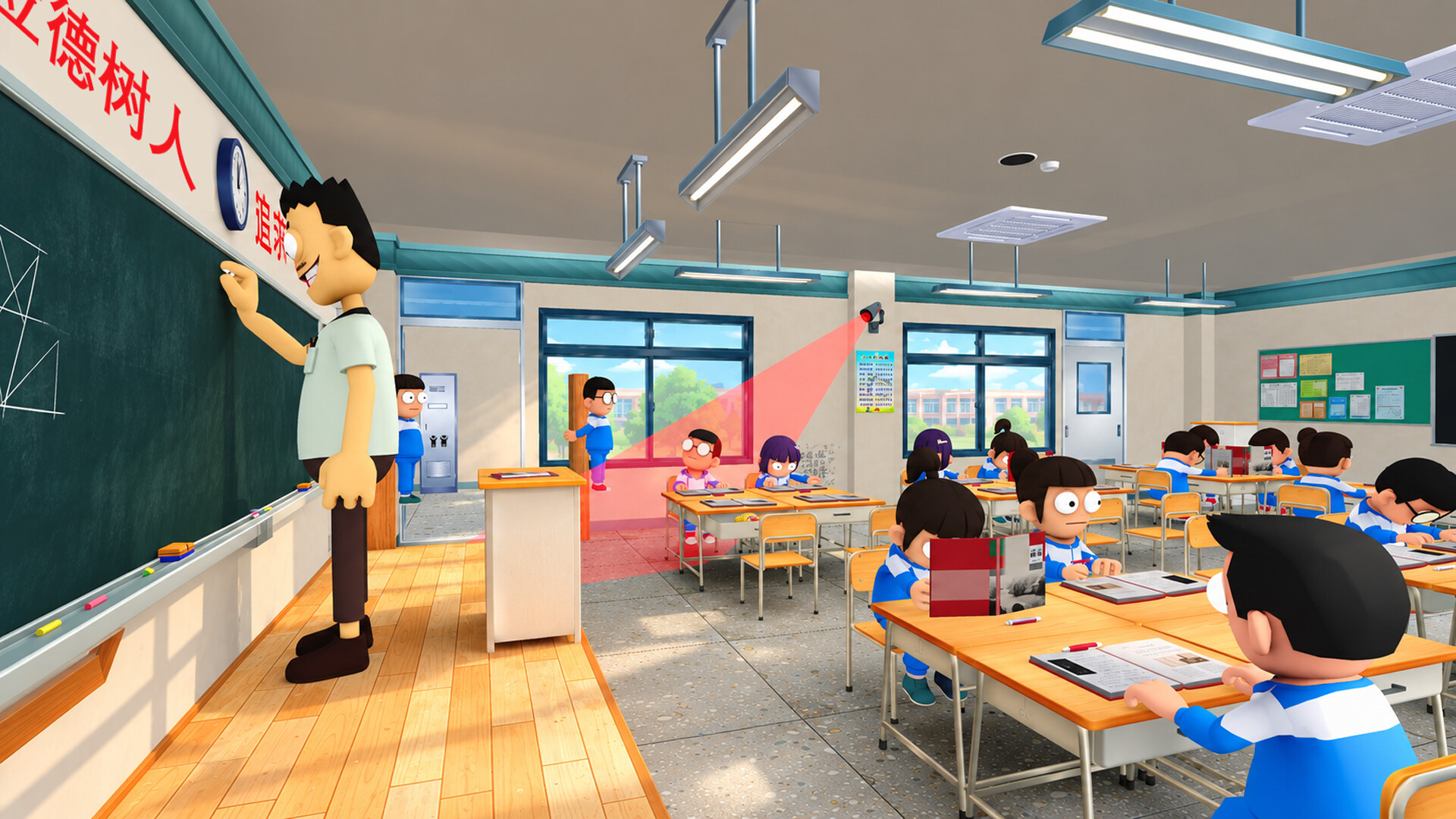
Worst Class Ever turns an ordinary classroom into a chaotic multiplayer competition where students try to cause trouble without getting caught, while the teacher attempts to identify every rule-breaker hiding among the crowd. The game combines stealth, observation, deception, teamwork, and fast decision-making. One player takes the teacher's role, while the remaining players act as mischievous students who must blend in with NPC classmates, secretly complete activities, and avoid attracting attention. With different classroom environments, prank items, and opportunities for unexpected distractions, every match can develop in a different way.
Winning in Worst Class Ever requires more than simply hiding behind a desk or running away when the teacher looks in your direction. Students need to understand NPC behavior, choose the right moment to perform suspicious actions, coordinate with teammates, and use available items strategically. Teachers, on the other hand, must learn to recognize unusual movements, observe patterns, and avoid wasting valuable time accusing innocent classmates. This guide explains how to approach both roles, from preparing for a match and learning the classroom layout to completing objectives, using equipment, rescuing teammates, and improving your overall strategy.
1. How to Understand the Game Rules Before Your First Match
Before developing advanced strategies, understand the basic structure of Worst Class Ever. The game is an asymmetric multiplayer party experience in which one player becomes the teacher and the others become mischievous students. The students must secretly perform activities such as eating snacks, using phones, or passing notes while trying to look like ordinary NPC classmates. The teacher must observe the classroom, identify suspicious behavior, and restore order by catching the human-controlled troublemakers.
The two sides have different objectives, which means they require completely different approaches. Students should focus on blending into the classroom, completing their activities, and creating opportunities for teammates. The teacher should focus on observation, identifying inconsistencies, and controlling the classroom rather than chasing every movement. A strategy that works well for students may be completely ineffective for the teacher. Understanding this difference is the foundation of consistent performance.
The game also uses different classroom environments, including regular classrooms, night study areas, and computer labs. Each environment changes how players can move, hide, and observe others. Some areas provide more visual cover, while others create different opportunities for students to perform activities without being noticed. Before trying complicated tactics, spend time learning the basic controls, interaction prompts, and available equipment.
A useful beginner checklist includes:
- Learn how to move, interact, and use available items.
- Understand the objectives for the teacher and student roles.
- Identify how NPC classmates behave during normal activities.
- Check the classroom layout before choosing a strategy.
- Pay attention to the match timer and objective progress.
- Learn what happens when a student is detected or caught.
Do not expect to master every mechanic in the first match. The most useful early goal is to understand what actions create suspicion and how the game responds when players are detected. Once these basic rules become familiar, you can start making deliberate decisions instead of reacting randomly.
2. How to Choose the Best Strategy When Playing as a Student
Playing as a student is mainly about controlling your behavior. You are not simply trying to avoid the teacher's view; you are trying to appear like an ordinary NPC while secretly completing your objectives. The most important principle is to avoid unnecessary suspicious actions. Every movement, interaction, or unusual pause can potentially attract attention, especially when the teacher is actively observing the classroom.
At the beginning of a match, take a moment to understand your surroundings. Look at the desks, nearby NPC classmates, available hiding positions, and the teacher's location. Choose a position that allows you to observe the teacher without constantly changing seats. Moving around too frequently can make you stand out, so it is usually better to establish a comfortable position and wait for a suitable opportunity to act.
Your behavior should also match the surrounding NPCs as closely as possible. If the students around you are sitting quietly, avoid standing up or moving unnecessarily. If NPC classmates are performing ordinary classroom activities, imitate those actions when possible. The objective is to make your character appear like part of the environment rather than an obvious player-controlled troublemaker.
To improve your student strategy:
- Observe nearby NPCs before performing an action.
- Avoid moving without a clear reason.
- Choose opportunities when the teacher is distracted.
- Do not repeatedly perform suspicious activities in the same place.
- Use the environment to reduce the teacher's ability to observe you.
- Coordinate with teammates instead of attempting every objective alone.
Remember that hiding is only one part of the student role. You still need to make progress toward the team's objectives. Spending the entire match sitting quietly may reduce your chances of being caught, but it also prevents you from contributing effectively. The best students balance patience with carefully timed actions.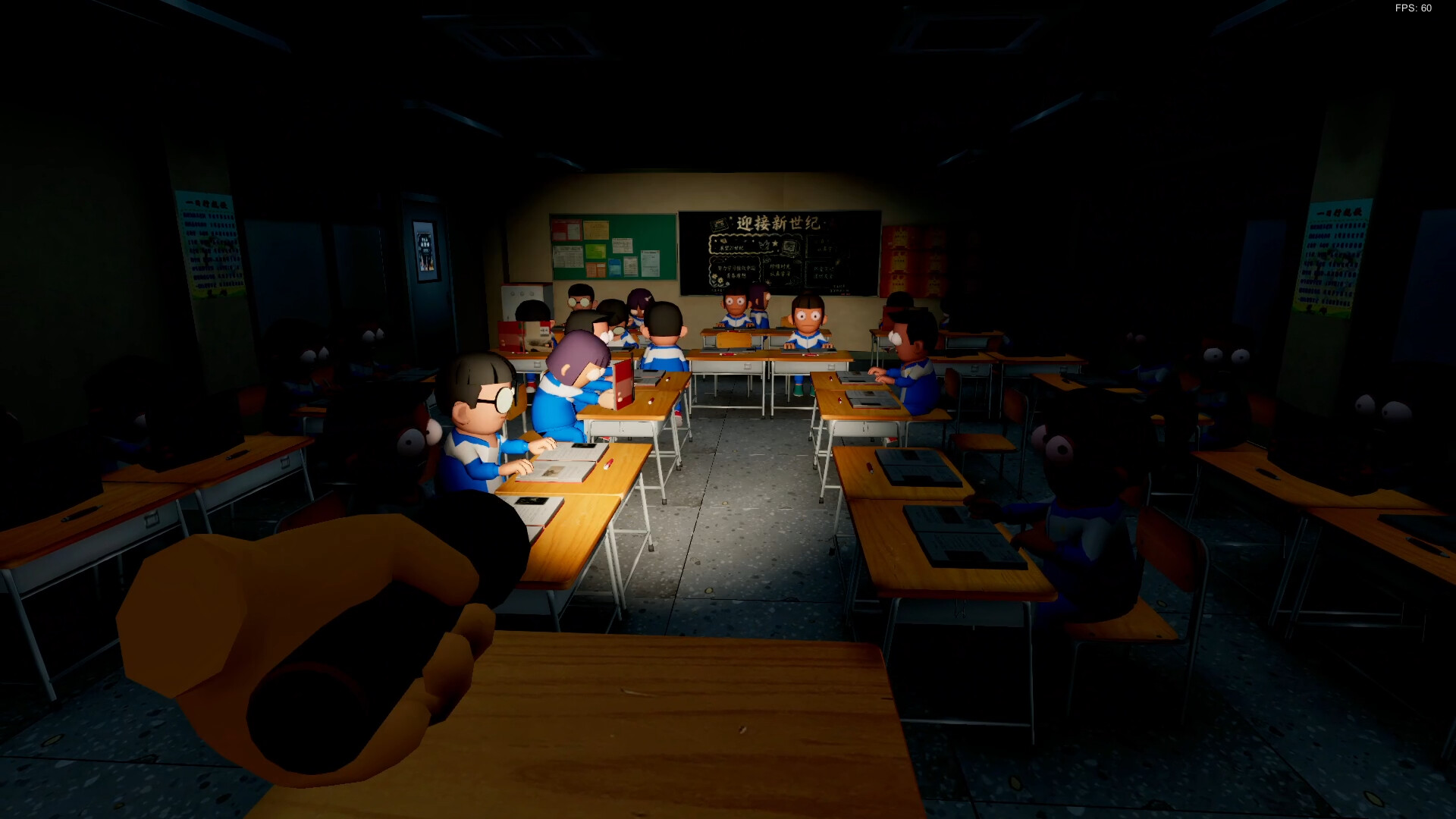
3. How to Blend in With NPC Classmates Without Getting Caught
Blending in with NPC classmates is one of the most important skills in Worst Class Ever. The teacher is searching for human-controlled students among a large group of characters who may look similar. This creates a social deduction challenge where small differences can become important clues. A student who moves unnaturally, performs an action at the wrong moment, or repeatedly behaves differently from nearby NPCs may attract attention.
Start by observing the rhythm of the classroom. Notice whether NPC students remain seated, look toward the board, write in books, or perform other ordinary activities. You do not need to copy every movement perfectly. Instead, avoid behavior that creates an obvious contrast with the surrounding characters. For example, standing up when everyone else is sitting can make you easier to notice, particularly if the teacher has a clear view of your desk.
Positioning is equally important. A desk surrounded by several NPC classmates can make it more difficult for the teacher to identify you immediately. However, sitting in an isolated position may also make unusual behavior easier to recognize. Choose a location based on the map layout and the teacher's current position rather than assuming that the most distant desk is always the safest.
You should also avoid repeating the same suspicious action too frequently. If you repeatedly eat snacks, use your phone, or interact with objects while the teacher is looking toward your section, you increase the chance of being discovered. Change your timing and use normal classroom behavior between objectives whenever possible.
A practical blending routine is:
- Observe the NPCs around your desk.
- Choose a position with reasonable visual cover.
- Wait until the teacher focuses elsewhere.
- Perform one objective or suspicious activity.
- Return to normal classroom behavior.
- Watch for changes in the teacher's attention.
- Move only when staying in your current position becomes unsafe.
The most effective disguise is not necessarily a complicated one. Consistent and ordinary behavior can be more convincing than constantly trying to perform elaborate movements. Your goal is to become visually unremarkable.
4. How to Complete Student Pranks and Objectives Safely
Student objectives are essential because avoiding detection alone does not guarantee success. Players need to perform mischievous activities while managing the risk of being caught. Depending on the available match objectives, these activities may involve secretly eating snacks, using phones, passing notes, or interacting with objects in the classroom. Each action creates an opportunity to make progress, but it may also expose your identity.
The safest approach is to treat every objective as a short operation. Before interacting with an object, check where the teacher is looking and whether nearby NPCs provide useful cover. Avoid starting an action simply because the object is available. If the teacher is already watching your section, waiting a few seconds may be more valuable than taking an unnecessary risk.
You should also avoid concentrating all your activities in one location. If you perform several suspicious actions at the same desk, the teacher may notice a pattern. When the map and objectives allow it, use different opportunities across the classroom. However, do not move so frequently that your movement itself becomes suspicious. The ideal strategy is controlled variation rather than constant repositioning.
When planning objectives, consider these factors:
- Distance: Is the target easy to reach without crossing the teacher's view?
- Timing: Is the teacher currently distracted or observing another section?
- Cover: Can nearby desks or NPCs make your activity less noticeable?
- Risk: Will the action require an unusual movement or long interaction?
- Teamwork: Can another student create a distraction while you complete the objective?
Do not confuse activity with progress. Performing several actions quickly may seem productive, but getting caught early can remove an important player from the team's strategy. A successful student knows when to act and when to wait. Completing objectives consistently is usually more useful than attempting every available prank immediately.
5. How to Use Different Classroom Maps to Your Advantage
Worst Class Ever features different classroom environments, and each one changes the way students and teachers approach a match. Learning the layout is important because the same strategy may not work in every location. A position that provides excellent cover in a regular classroom may be exposed in a computer lab, while a darker study area may create different challenges for the teacher.
In a standard classroom, pay attention to desk arrangements, walking paths, and the teacher's position near the front of the room. Rows of desks can create predictable observation areas, so students should consider how their movements appear from the teacher's perspective. Teachers should use the arrangement to divide the room into sections and avoid focusing on only one group of students for too long.
Night study areas create a different type of challenge because visibility and lighting can affect how players observe the environment. Students may have more opportunities to remain unnoticed in darker areas, but they should still avoid unnecessary movement. Teachers should pay attention to unusual behavior and use available detection equipment when the normal view is insufficient.
Computer labs also introduce a different layout. Rows of monitors, desks, and partitions can affect visibility and provide additional places where students can attempt to remain unnoticed. However, these objects can also create useful observation points for the teacher. Rather than scanning the entire room randomly, teachers should inspect suspicious areas and pay attention to students whose behavior differs from the surrounding NPCs.
To learn a new map efficiently:
- Walk through the environment during safe moments.
- Identify the teacher's main observation position.
- Memorize important desk arrangements and obstacles.
- Notice areas where visibility is limited.
- Learn where objectives and interactive objects appear.
- Identify routes that allow movement without crossing exposed areas.
Map knowledge becomes more valuable as you play more matches. Instead of relying on one strategy for every classroom, adapt your positioning and timing to the environment. The strongest players understand that the room itself is part of the competition.
6. How to Use Prank Items and Special Equipment Effectively
Special equipment adds another layer of strategy to Worst Class Ever. Students can use disruptive items to create confusion or interfere with the teacher's ability to observe them. The teacher also has equipment designed to detect suspicious students and control the classroom. Items may include tools such as smoke bombs, flashbangs, or tranquilizer guns for students, while teachers can use equipment such as radar, drones, security cameras, and other detection tools.
The biggest mistake beginners make is using equipment immediately after obtaining it. A prank item is most valuable when it creates an advantage at the right moment. For example, a distraction can be more effective when a teammate is completing an important objective than when nobody is nearby. Using an item without a clear purpose may waste its potential and reveal your team's intentions.
Students should think about how an item changes the teacher's ability to observe the room. If an item temporarily blocks vision or creates confusion, coordinate its use with another action. One player can create a distraction while another completes an objective or changes position. This is more effective than having everyone use their equipment at the same time without coordination.
Teachers should approach their equipment differently. Detection tools are most useful when they help investigate a specific suspicion. If a student behaves unusually, use the available equipment to gather more information rather than activating every tool immediately. This prevents unnecessary use and allows you to keep important options available for later stages of the match.
A basic equipment strategy includes:
- Save disruptive items for moments when they create a clear advantage.
- Coordinate item use with teammates.
- Avoid using multiple distractions without a plan.
- Teachers should use detection equipment to investigate suspicious areas.
- Learn the purpose and limitations of each available item.
- Watch for changes in visibility and movement after equipment is activated.
Equipment should support your main objective rather than replace good decision-making. A student who relies entirely on distractions may still be caught, while a teacher who uses every detection tool without observing the classroom may waste valuable opportunities.
7. How to Play as the Teacher and Identify Suspicious Students
The teacher role requires a different mindset from the student role. Instead of hiding your behavior, you must identify players who are pretending to be ordinary NPC classmates. The classroom may contain many characters performing similar activities, so rushing to accuse anyone who moves can lead to mistakes. Successful teachers observe patterns and look for behavior that does not fit the surrounding environment.
Begin by dividing the classroom into sections. Watch one group of desks, then gradually shift your attention to another. This is more manageable than trying to observe every student at once. Pay attention to unusual movement, repeated interactions, suspicious pauses, and actions that appear inconsistent with nearby NPCs. A single strange movement may not prove anything, but repeated unusual behavior can provide a stronger reason to investigate.
You should also observe how students behave after the teacher changes position. Some players may wait until you turn away before performing a prank. Others may become nervous and move unnecessarily when you approach. Watch for these changes rather than focusing only on the action itself. The timing of a movement can be just as important as the movement.
Avoid spending too much time watching one student without a clear reason. While you focus on a single desk, other students may be completing objectives elsewhere. A good teacher maintains broad awareness of the room and investigates suspicious behavior when there is enough evidence.
Use this observation routine:
- Scan the entire classroom at the beginning.
- Identify groups of NPCs with similar behavior.
- Watch for movements that break the normal pattern.
- Check whether suspicious actions repeat.
- Use detection tools when additional information is needed.
- Prioritize students who show clear signs of unusual behavior.
- Return to a wider classroom scan after each investigation.
Patience is essential. Students are trying to make you react emotionally or waste time. If you become distracted by every small movement, you may miss the players who are actually completing objectives. Focus on evidence and manage your attention carefully.
8. How to Rescue Teammates and Coordinate Student Teamwork
Teamwork can change the outcome of a match, especially when one or more students have already been caught. Students should not treat every objective as an individual challenge. Coordinating movement, distractions, and rescue attempts can create opportunities that are difficult for the teacher to control. A team that communicates effectively can force the teacher to divide attention between several threats.
When a teammate is caught, first evaluate the situation. Consider where the teacher is positioned, how many students remain active, and whether a rescue opportunity is available. A rushed attempt may result in another student being caught without helping the original teammate. Instead, wait for a useful moment and coordinate with players who are still free.
Distractions can be useful during rescue attempts. One student may draw the teacher's attention toward another section while a teammate approaches the captured player. However, this should be done carefully. If the distraction is too obvious, the teacher may recognize the plan and respond immediately. The best teamwork makes the teacher choose between multiple situations rather than presenting one predictable target.
Communication is also important when several players are active. Share useful information about the teacher's position, suspicious areas, and available opportunities. Avoid sending unnecessary messages that interrupt teammates or create confusion. Short, clear communication is more effective than everyone trying to direct the entire team at once.
A coordinated student team should:
- Inform teammates when the teacher changes position.
- Share information about safe routes and suspicious areas.
- Avoid performing the same objective at the same time.
- Use distractions when another player needs an opportunity.
- Evaluate rescue risks before approaching a captured teammate.
- Continue completing objectives while supporting the team.
The most important principle is to avoid turning teamwork into uncontrolled chaos. Multiple players acting without coordination may make the teacher's job easier. A simple shared plan can create more opportunities and improve the team's chances of surviving the match.
9. How to Avoid Common Mistakes That Lead to Losing Matches
Many losses in Worst Class Ever happen because players repeat predictable mistakes. Students may move too frequently, perform pranks at obvious moments, or waste equipment without considering the teacher's position. Teachers may become impatient, chase every suspicious movement, or ignore the rest of the classroom while investigating one student. These mistakes are avoidable once you understand why they happen.
For students, the most common problem is acting without observing first. A player sees an available objective and immediately interacts with it, even though the teacher is watching. Another common mistake is changing positions too often. Although movement can help you escape an unsafe area, unnecessary movement makes you more noticeable. Students should also avoid using every prank item at the beginning of the match, because doing so may leave the team without useful equipment later.
Teachers have their own set of common mistakes. One is making assumptions based on a single movement. NPCs and player-controlled characters may behave similarly at certain moments, so a single unusual action should not automatically become a reason to commit to an investigation. Another mistake is focusing too heavily on one section while other students continue their activities elsewhere.
To improve your results, review each match and identify the main reason for failure. Ask yourself whether you were caught because of poor positioning, bad timing, predictable behavior, or a lack of teamwork. If you were playing as the teacher, consider whether you missed repeated suspicious actions or wasted time investigating the wrong student.
Common mistakes to avoid include:
- Moving without a clear purpose.
- Performing pranks while directly observed.
- Repeating the same suspicious behavior.
- Using equipment without a specific objective.
- Ignoring teammates who need assistance.
- Teachers focusing on one area for too long.
- Accusing students without sufficient evidence.
- Forgetting to monitor objective progress.
Improvement comes from correcting one or two mistakes at a time. You do not need to change your entire strategy after every match. Small adjustments to positioning, timing, and observation can produce better results over several rounds.
10. How to Develop an Advanced Strategy for Consistent Wins
Once you understand both roles, the next step is to develop a flexible strategy that adapts to the match. Experienced students do not rely on one hiding position or one prank sequence. They observe the teacher, evaluate the classroom, and adjust their actions based on what is happening. Experienced teachers do not simply scan the room faster; they recognize patterns, manage attention, and use equipment when it provides meaningful information.
As a student, build your strategy around three stages: observation, action, and recovery. During observation, learn where the teacher is looking and identify a safe opportunity. During action, complete an objective or use an item with a clear purpose. During recovery, return to normal behavior and avoid drawing attention immediately after the activity. This structure helps prevent rushed decisions and makes your actions less predictable.
As a teacher, use a similar three-stage approach: scan, investigate, and control. Scan the room to establish a general understanding of student behavior. Investigate when you notice something unusual. Then control the situation by responding to the confirmed threat and returning your attention to the rest of the classroom. Do not allow one suspicious student to consume all your attention if the match requires you to monitor several players.
You should also become comfortable switching strategies when the situation changes. If students are completing objectives quickly, the teacher may need to increase the frequency of classroom scans. If the teacher is using detection equipment effectively, students may need to rely more on timing and teamwork. If several students are caught, the remaining players should reconsider whether an aggressive rescue is worthwhile or whether completing the remaining objectives is a better option.
For long-term improvement, focus on these habits:
- Learn every available classroom layout.
- Understand the strengths and weaknesses of both roles.
- Memorize the purpose of available equipment.
- Communicate clearly with teammates.
- Avoid repeating predictable actions.
- Review why each match was won or lost.
- Adapt your approach instead of relying on a single tactic.
The best players are not necessarily the ones who move the fastest or use the most items. They are the ones who understand when to act, when to wait, and when to change their plan. Worst Class Ever rewards observation and decision-making as much as it rewards mischief and quick reactions.
Winning more matches in Worst Class Ever requires a combination of stealth, observation, teamwork, and smart equipment management. Students must blend in with NPC classmates, complete their objectives at suitable moments, and coordinate distractions or rescue attempts without becoming predictable. Teachers must observe the classroom carefully, recognize suspicious behavior, and use their detection tools to investigate potential troublemakers without losing control of the wider match.
The most effective strategy is to understand both sides of the game. Learning how students hide helps teachers recognize unusual behavior, while understanding how teachers observe the room helps students make better decisions. Every classroom creates different opportunities, so players should adapt their positioning and timing instead of relying on one fixed routine. With practice, clear communication, and careful use of equipment, you can become a more effective student, a more observant teacher, and a stronger competitor in every chaotic classroom match.