.webp)
Hollow Knight: The Beautiful Loneliness of a Kingdom That Refuses to Disappear

1. A Kingdom That Has Already Lost Its Future
Some games introduce their worlds through grand declarations. A narrator explains an ancient war, a powerful ruler announces a prophecy, or a protagonist receives a mission that immediately establishes what must be accomplished. The player knows where they are, what has happened, and why the journey matters.
Hollow Knight takes a different approach. It invites players into Hallownest, a kingdom that appears to have reached the end of its story before the player arrives. There is no triumphant civilization waiting to welcome a new hero. Instead, the player encounters abandoned structures, silent corridors, forgotten settlements, and inhabitants who seem to exist somewhere between remembering the past and accepting that it is gone. The kingdom is not presented as a place that needs a visitor to make it interesting. It already has a history, and that history has left marks everywhere. This creates a distinctive first impression. Hallownest feels less like a fantasy world preparing for an adventure and more like a place where an adventure happened long ago, leaving behind only fragments for someone else to discover.
The Knight, the small and largely silent protagonist, enters this environment without an obvious personal explanation for why the journey must happen. There is no elaborate introduction designed to make the player immediately understand their identity. Instead, movement becomes the first form of discovery. The player walks through unfamiliar spaces, encounters strange creatures, and gradually learns which parts of the environment can be trusted.
At first, the lack of explanation may seem like a simple narrative choice. In practice, it shapes the entire experience. Because the game does not explain everything immediately, players must pay attention to what they see. A ruined building becomes a question. An unusual character becomes a possible source of information. A passage leading into darkness becomes an invitation to discover what the world has hidden.
Curiosity takes the place of certainty. The kingdom's apparent emptiness also changes the meaning of exploration. In a more conventional adventure, reaching a new location often promises a reward, a mission, or a significant story development. In Hollow Knight, a destination may offer none of these things immediately. Sometimes the reward is simply a better understanding of the place. That understanding accumulates gradually. A region that initially seems like a collection of platforms and enemies begins to feel like part of a larger history. The player starts recognizing patterns in the architecture, noticing relationships between locations, and wondering what kind of civilization could have created such a world. Hallownest becomes compelling not because it promises a bright future, but because it suggests that something important happened here — and that the truth has not entirely disappeared.
2. Silence Becomes a Form of Storytelling
The most striking thing about Hollow Knight is how much it communicates without relying on constant dialogue.
Silence is not merely an absence of sound. It changes how the player interprets the world. When a corridor is quiet, the player becomes more aware of their own movement. When a distant sound interrupts that quiet, it can make an unfamiliar location feel suddenly alive. When a character speaks, their words carry more weight because the game has not surrounded every moment with explanation.
This restraint creates room for interpretation. A character may offer a few observations without revealing everything they know. An inscription may provide a fragment of history without explaining how it fits into the larger picture. A ruined structure may suggest an important event while leaving the details uncertain.
The player is therefore encouraged to participate in the storytelling. They are not simply receiving information in a predetermined sequence. They are assembling a personal understanding from details scattered throughout the world. That process requires attention, but it also creates a stronger sense of ownership over discovery. When players reach a conclusion after noticing several clues, the revelation feels like something they have worked toward rather than something the game has delivered to them.
![Hollow Knight [PC Games-Digital] • World of Games](https://www.wog.ch/nas/screens/swd/swd_hollowknightj.jpg)
Silence also gives emotional space to the kingdom itself. Hallownest does not constantly tell the player that it is tragic. Its condition communicates that idea more quietly. Empty spaces, damaged buildings, and isolated inhabitants suggest a world in which ordinary life has been interrupted. The game trusts the player to recognize the sadness without needing every location to explain it. This is an important difference between mystery and confusion. A story becomes confusing when its information feels disconnected or arbitrary. Mystery works when the available details suggest that a larger pattern exists, even if the player cannot yet understand it.
Hollow Knight often operates in that second space. Its world provides enough evidence to encourage questions while withholding enough information to keep those questions alive.
The player might not know why a particular place matters, but its design encourages them to suspect that it does. They may not understand a character's motives, yet the character's behavior suggests a history beyond the current conversation. The result is a world that feels as though it has more to say than it is willing to reveal. And that restraint is precisely what makes listening, observing, and remembering such important parts of the adventure.
3. Hallownest Feels Like a Place, Not a Series of Levels
A world in a platforming game can easily become a sequence of separate challenges. One area tests jumping, another introduces stronger enemies, and a later location increases the difficulty. The environments may look different, but their primary function is to provide spaces in which the player must demonstrate improved skill.
Hollow Knight uses its regions to do more than that.
Hallownest is divided into areas with distinctive visual identities, atmospheres, and gameplay demands. Yet these places feel connected through their geography and history. Moving from one region to another changes the player's understanding of the kingdom rather than simply introducing a new backdrop.
The Forgotten Crossroads, Greenpath, the City of Tears, and the Ancient Basin each create different expectations. Their environments suggest different relationships between civilization, nature, danger, and decay. Some spaces feel open and inviting, while others seem designed to make the player uncomfortable. The differences encourage players to adjust their expectations as they travel. But the world does not feel like a collection of disconnected attractions. Paths connect areas in ways that reward familiarity. A route that initially appears inaccessible may later become an important shortcut. A location visited early in the game may acquire new significance after the player gains an ability or learns something about the kingdom's history.
The map becomes a record of the player's changing knowledge. This is one of the reasons returning to an earlier location can feel satisfying rather than repetitive. The player is no longer approaching the area with the same abilities or assumptions. They may now understand how a passage connects to another region, recognize a landmark that previously meant nothing, or discover a route that changes the practical meaning of the space. The environment has not necessarily changed. The player has. That distinction creates a particularly strong connection between exploration and learning. Progress is not always represented by a new destination. Sometimes it appears in the ability to interpret a familiar location more accurately. A dead end becomes a future possibility. An unfamiliar landmark becomes a navigational reference. A route that once seemed impossible becomes evidence of how much the player has learned. The world gradually becomes less mysterious in some ways while becoming more interesting in others. This balance is central to the experience. If every question were answered immediately, Hallownest would lose its sense of depth. If every path remained completely incomprehensible, exploration would become exhausting. By allowing knowledge to accumulate through movement, Hollow Knight makes understanding the kingdom feel like an achievement in its own right. The player is not simply clearing levels. They are learning how to belong, temporarily, in a place that existed long before them.
4. Getting Lost Is Part of the Adventure
Many games treat getting lost as a problem to be eliminated. Maps identify objectives, markers point toward the next destination, and navigation systems reduce uncertainty so that players can focus on completing tasks.
Hollow Knight allows uncertainty to remain part of the experience.
Its map gradually becomes a tool for understanding the world, but it does not remove every navigational challenge. Players must pay attention to landmarks, remember routes, and decide which unfamiliar paths are worth investigating. Progress sometimes requires moving away from the most obvious destination.
This can be frustrating, particularly when the player is searching for a specific route or trying to reach a place they have already seen. But the frustration serves a purpose when it encourages a more active relationship with the environment. Instead of following instructions, the player must form a mental picture of the space. They begin to recognize the visual language of Hallownest: distinctive rooms, unusual structures, changes in background design, and connections between areas. Navigation becomes less about checking a marker and more about remembering how the world fits together. The player develops familiarity through repetition, but the repetition is not necessarily empty. Returning to a location can reinforce the mental map, reveal a new connection, or provide a different perspective on a previously confusing route.
There is also a psychological difference between being told where to go and deciding where to go. When the game provides a precise destination, movement can become an obligation. When the player chooses a path because it seems interesting, exploration becomes a personal decision. The destination matters partly because the player selected it.
This freedom makes discoveries feel individual. Two players may remember different routes, different surprises, or different moments when the world finally made sense. Their experiences are shaped by the choices they made while navigating uncertainty. The design also creates a sense of vulnerability. Without complete knowledge, the player cannot always predict what lies ahead. An unfamiliar route may lead to a useful discovery, a dangerous encounter, or a place they are not yet prepared to explore. That uncertainty makes the decision to continue meaningful.
Getting lost in Hallownest is not always enjoyable in the immediate sense. Sometimes it means retracing steps or realizing that a path cannot yet be completed. But the experience teaches the player to treat uncertainty as a normal part of exploration rather than evidence that they have failed. Eventually, the kingdom begins to feel less like a maze and more like a place the player is learning to understand. And that understanding is earned one uncertain step at a time.
5. The Knight's Silence Makes the Player More Important
The Knight is an unusual protagonist because the game offers relatively little conventional characterization through dialogue. The character does not constantly explain their feelings, deliver speeches about their purpose, or comment on every new discovery. This silence leaves a gap between the protagonist and the player. In a dialogue-heavy game, the protagonist's personality often determines how the player interprets an event. Their words, memories, and emotional reactions provide a framework for understanding what happens. The player may control the character, but the character's perspective remains a powerful influence on the experience. The Knight offers less of that guidance. As a result, the player's reactions become more prominent. Fear, curiosity, frustration, and satisfaction emerge largely from the experience of navigating Hallownest rather than from a protagonist explaining what the experience means.
When a player reaches a difficult location, the emotional response belongs primarily to the player. When a mysterious character reveals an unexpected detail, the player must decide what to make of it. When the world presents a disturbing image or an ambiguous piece of history, there is no long internal monologue telling them exactly how to interpret it. This does not mean the Knight has no narrative significance. The character's place in the world is connected to the game's larger mysteries, and the player's discoveries gradually reshape their understanding of the journey. But the limited dialogue allows the protagonist to function as a point of connection rather than a constant source of explanation. The Knight moves through Hallownest, and the player learns about the kingdom through that movement. The character's small size and quiet presence also create an interesting contrast with the enormous structures and ancient forces surrounding them. The protagonist appears insignificant compared with the scale of the world, yet their actions gradually bring them into contact with its deepest secrets. This relationship between smallness and significance gives the adventure much of its atmosphere.
The Knight does not dominate Hallownest through personality or authority. They enter it as a figure whose purpose is initially uncertain, and the meaning of their presence develops through exploration. The player's curiosity fills the space left by the character's silence. Rather than receiving an interpretation of every event, the player must decide which details matter and how they connect. That makes the act of playing inseparable from the act of understanding.
6. Combat Is a Conversation With the World
Combat in Hollow Knight is precise, demanding, and closely connected to movement. The player must understand enemy patterns, manage distance, and recognize the moments when an attack is safe. Success depends on learning how an opponent behaves rather than simply pressing buttons as quickly as possible.
This makes combat feel like a form of communication.
An enemy's movements provide information. A pause may create an opportunity to attack. A sudden change in position may signal that the player needs to move. Repeated encounters gradually reveal patterns that initially seemed unpredictable.
The player learns by observing, making mistakes, and adjusting their behavior. Boss encounters make this process especially clear. A boss may appear overwhelming during the first attempt because its movements are unfamiliar. The player does not yet know which attacks can be avoided easily, how much space is required, or when a brief opening will appear. Repeated attempts turn that uncertainty into knowledge. A movement that once seemed impossibly fast becomes recognizable. An attack that caused repeated damage becomes something the player can anticipate. The fight changes because the player has learned to interpret it.
This kind of progression is deeply satisfying because the improvement feels personal. The player has not simply acquired a more powerful weapon or watched a character become stronger. They have become more capable of understanding the challenge in front of them. Failure is part of that process, although it is not always pleasant. A difficult encounter can become frustrating when progress feels slow or when the player struggles to identify what went wrong. The design asks for patience, and not every player will enjoy the same degree of pressure. But when the learning process works, victory carries a particular weight. The player knows that the outcome changed because their understanding improved. Combat also reinforces the atmosphere of Hallownest. Enemies are not merely obstacles placed between the player and a reward. Their behaviors contribute to the character of each region, making the environment feel inhabited by creatures with distinct patterns and threats. The player must adapt to the place they have entered.
In this sense, combat and exploration share the same underlying principle. Both ask the player to observe before acting. Both reward familiarity. Both transform uncertainty into understanding through repeated experience.
The difference is that exploration teaches the player how to read the world, while combat teaches them how to survive within it.
7. The Beauty of Failure
Failure in games is often treated as a temporary interruption. The player loses, returns to a checkpoint, and tries again. The purpose of the failure is primarily practical: it teaches a lesson or creates a challenge that must eventually be overcome.
In Hollow Knight, failure can also shape the emotional atmosphere.
When a difficult encounter ends badly, the player may have to return through familiar territory. The route becomes associated with the previous mistake, and the next attempt carries the memory of what happened. A location that once seemed manageable may now feel tense because the player knows how easily progress can be lost.
This creates a relationship between place and experience. The world becomes a record of success and frustration. Certain areas are remembered because they were difficult to navigate. Certain enemies become memorable because they forced the player to change their approach. A boss arena may carry the emotional weight of several failed attempts before the eventual victory. The experience is not always beautiful while it is happening. Repetition can become tedious, and a poorly timed mistake can be discouraging. It would be misleading to suggest that every failure automatically improves the experience.
The more interesting point is that failure gives progress a history.
When the player finally overcomes a challenge, the victory is connected to everything that preceded it. The result feels different from an effortless win because the player remembers the uncertainty, the failed strategies, and the gradual discovery of a better approach. The emotional reward comes partly from the contrast between earlier helplessness and present competence.
This is particularly effective in a game where mastery develops through understanding. The player may begin by reacting instinctively, hoping that quick movement will be enough. Over time, they learn to recognize patterns, control their positioning, and remain calm when an encounter becomes difficult. The challenge changes their behavior. That process also reflects the larger atmosphere of Hallownest. The kingdom does not make itself easy to understand, and it rarely provides comfort simply because the player is struggling. Progress requires attention and persistence. The player must decide whether a difficulty is worth continuing through, whether a different route might be better, or whether they need to approach the problem with greater patience.
Failure becomes meaningful when it helps answer those questions.
8. The Music Gives Emptiness an Emotional Shape
A world defined by silence still needs a way to communicate atmosphere, and Hollow Knight uses its music with considerable restraint.
The soundtrack does not need to overwhelm every scene to establish emotional significance. Its melodies can make a location feel solemn, mysterious, unsettling, or unexpectedly peaceful. Music gives the player an emotional frame for the environment without requiring a character to explain what the place represents.
This is especially important in a game where the visual world often contains more history than the dialogue reveals.
A ruined city can feel more than abandoned when its music suggests the lingering weight of what has been lost. A quiet area can provide a sense of relief without implying that the surrounding world has become safe. A dangerous encounter can feel more intense when the music reinforces the player's awareness of the threat.
The soundtrack also helps distinguish regions without relying entirely on visual design. Each location develops its own atmosphere, and music becomes part of the player's memory of moving through it.
A place may be remembered not only by its colors or architecture but by the feeling created when its music begins.
This emotional association strengthens the world-building. The player does not need to know every detail of a location's history to sense that it carries a particular mood. Music can communicate a feeling before the player understands its narrative significance.
That does not mean the soundtrack provides a definitive explanation. The same melody may evoke different emotions depending on what the player has experienced. A quiet theme heard during an early visit might feel different after the player has learned more about the surrounding world.
The music becomes part of the player's changing interpretation of Hallownest.
Its restraint is important. If every moment were accompanied by overwhelming music, the game would leave less room for the player to notice environmental details or experience the silence between events. The contrast between musical presence and absence allows each to become more meaningful.
The result is an atmosphere that feels carefully shaped rather than constantly announced.
The world does not need to tell the player that it is lonely. Sometimes the music is enough to make that loneliness felt.
9. Why Hallownest's Ruins Feel Different From Ordinary Ruins
Ruins are a familiar element of fantasy storytelling. They suggest ancient civilizations, forgotten knowledge, and the passage of time. They can create an immediate sense of mystery, especially when the player encounters structures whose original purpose is no longer obvious.
But ruins become more interesting when they suggest more than age.
In Hollow Knight, the remains of Hallownest are connected to a kingdom whose history still influences the present. The buildings and pathways are not simply old. They belong to a world whose former order has broken down, leaving traces that the player must interpret.
The distinction is important because age alone does not create tragedy. A centuries-old building may be impressive without suggesting that anything meaningful has been lost. A ruined place becomes emotionally powerful when the player can imagine the lives that once depended on it.
Hallownest repeatedly encourages that imagination.
Its architecture suggests organization and purpose. Its settlements imply that communities once gathered in these spaces. Its roads and connections suggest that movement through the kingdom was once part of a functioning social world.
Now the player encounters these places in altered circumstances.
The physical structures remain, but their original context has weakened or disappeared. The player must reconstruct that context from the environment and the fragments of information they discover.
This creates a feeling of distance between the world as it once was and the world as it exists now.
The past becomes visible but inaccessible. The player can walk through the remnants of an earlier civilization, yet cannot simply return to the lives that gave those places their meaning.
That is what makes Hallownest feel more like a lost kingdom than a conventional fantasy dungeon. The ruins are not just obstacles to overcome. They are evidence of a larger existence that can no longer be experienced directly.
Exploration therefore becomes a form of historical imagination. The player looks at a place and wonders what happened there, what its inhabitants believed, and why the structures around them were built in the first place.
The answers are not always complete, but the questions make the world feel deeper.
10. A World That Rewards Attention More Than Speed
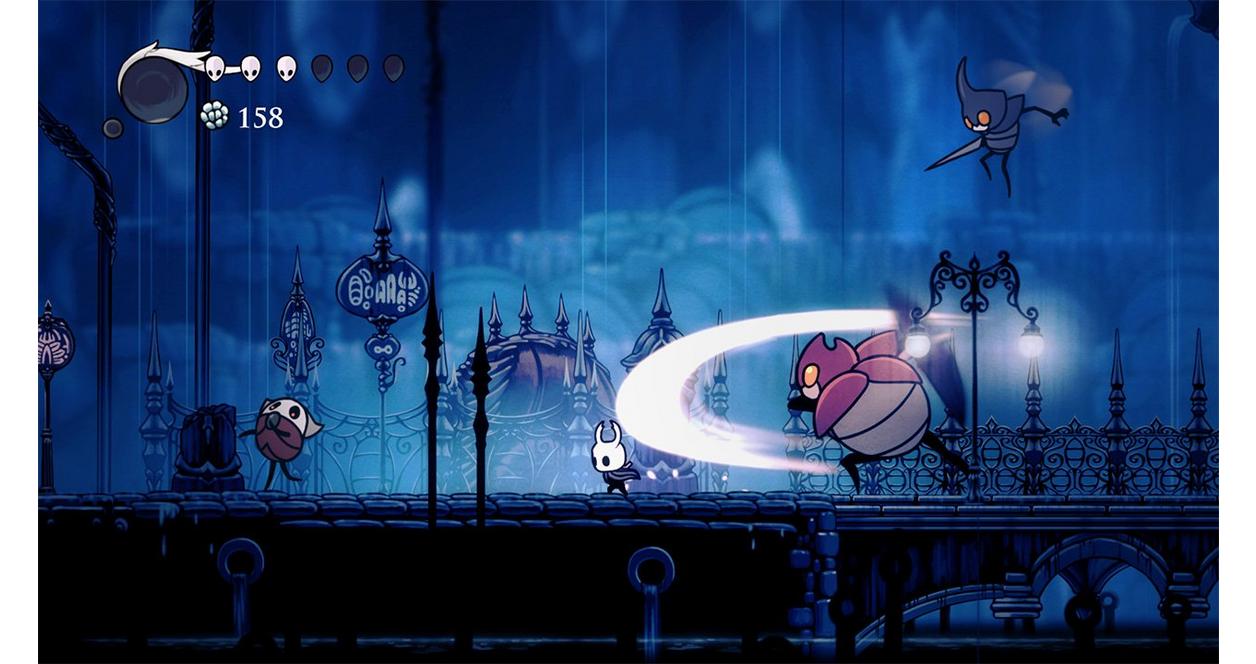
Many modern games are designed around visible momentum. Objectives appear in clear sequences, rewards arrive at regular intervals, and the player is continually encouraged to move toward the next milestone. This structure can be satisfying, especially when the game offers a large amount of content. Hollow Knight creates a different kind of momentum. Its progression often depends on the player's willingness to notice something, remember it, and return later with a new understanding. The game rewards curiosity, but it also requires patience. Not every mystery can be solved immediately, and not every path can be completed the first time it is discovered. This encourages a slower, more attentive style of play. The player may pause to examine a strange structure, speak to a character whose purpose is unclear, or investigate a route that appears to lead away from the most obvious objective. These actions may not produce immediate rewards, but they can make the world more understandable over time. Attention becomes a form of progress.
That approach can feel especially rewarding for players who enjoy building their own mental map of a game. They begin to recognize how different regions connect, remember where obstacles appeared, and develop theories about the relationship between the places they have visited. The world gradually becomes legible through experience rather than explanation. This is not the same as saying that every player must enjoy being uncertain. Some may prefer clearer guidance or a more direct narrative structure. The deliberate withholding of information can sometimes create frustration, particularly when the player is unsure whether they have overlooked a clue or simply need to return later. But for players who enjoy discovery, the uncertainty creates a distinctive pleasure.
The game allows them to be surprised by their own understanding. A connection that once seemed obscure becomes obvious in retrospect. A location that felt isolated turns out to be part of a larger pattern. An apparently minor detail gains importance after the player encounters new information. These moments make the world feel as though it is gradually opening rather than simply becoming larger. The player's knowledge expands alongside the map, and each new discovery changes the meaning of earlier experiences.
11. The Loneliness That Makes Discovery Matter
Loneliness is often treated as a negative emotion that a story should eventually resolve. A character begins alone, finds companions, and reaches a point where isolation has been replaced by belonging.
Hollow Knight approaches loneliness differently. It allows solitude to remain a defining feature of the journey without making every moment of solitude miserable.
The Knight travels through a world in which encounters with other characters can feel unusual precisely because they are not constant. When someone appears, their presence interrupts the rhythm of exploration. A conversation can become memorable because the player has spent so much time moving through spaces without sustained interaction.
This gives encounters a particular emotional texture. Characters may be strange, amusing, mysterious, or difficult to understand. Their presence reminds the player that Hallownest is not entirely empty, even when large parts of it seem abandoned. Each encounter adds another perspective to the world, suggesting that people continue to exist within it for reasons that may not be immediately clear.
Yet meeting someone does not necessarily remove the sense of isolation. The Knight remains a solitary figure moving through unfamiliar places. The player's understanding of the kingdom grows, but the world does not suddenly become welcoming. The journey continues to demand independence, observation, and a willingness to face uncertainty without constant reassurance.
This makes moments of connection feel distinct rather than routine.
The player can appreciate a character's presence without expecting that character to accompany them everywhere. A conversation can matter without becoming the beginning of a permanent friendship. An encounter can enrich the journey even if it does not change its overall direction. This is a quieter understanding of connection, one in which not every meaningful interaction needs to eliminate solitude. It also suits the game's larger atmosphere. Hallownest is a kingdom shaped by absence, and the Knight's journey is partly an experience of moving through that absence. The world contains traces of lives, fragments of history, and individuals who continue along their own paths. The player is not asked to repair every relationship or restore every community. They are asked to continue exploring, gradually discovering what remains. That makes loneliness more than a mood. It becomes part of the way the player encounters the world.
Conclusion: Some Worlds Become Beautiful Because They Are Broken
Hollow Knight presents a kingdom that has already suffered a profound collapse. Its abandoned structures, quiet corridors, and scattered inhabitants suggest a world whose former life can no longer be experienced in full. The player enters Hallownest not to witness its glory at its height, but to discover what remains after that glory has faded. That premise gives the game its distinctive atmosphere. Its silence encourages curiosity. Its interconnected geography turns movement into learning. Its combat makes mastery feel personal, while its ruins invite the player to imagine the lives that once occupied them. Together, these elements create a world that feels as though it has a history beyond the player's presence. The Knight does not need to explain every discovery for it to matter. The player can feel the significance of a place before understanding its complete story, and they can form a connection with a character without knowing everything about that character's past.