
An In Depth Analysis of Inertial Dynamics and Asymmetrical Weight Distribution in Carry The Glass
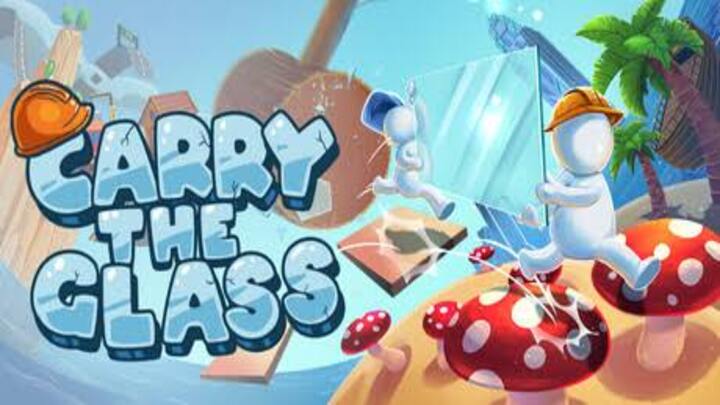
The release of the cooperative platformer Carry The Glass in late 2024 did not merely mark the addition of another casual multiplayer game to an already saturated market. Instead, it brought forward a silent but profoundly impactful revolution in how spatial interactive physics are handled in virtual environments. Developed by the visionary team at SlugShot Games, this seemingly lighthearted title requires two players to take on the roles of construction workers who must collaboratively carry an absurdly fragile pane of glass across a series of increasingly treacherous and geometrically complex terrains. However, beneath its highly stylized, colorful graphics and whimsical exterior, the game conceals a physics simulation engine that is ruthlessly complex and unforgiving. Instead of offering a generalized review of the overall gameplay loop, this article dives deeply into the core, maddening mechanical issue that every single player must eventually face: the intricate dynamics of inertia and the constantly shifting asymmetrical distribution of weight when attempting to maintain the delicate equilibrium of a giant glass pane.
The Genesis of Instability in the Original Physics Engine
When deconstructing the game's underlying physical architecture, analysts and players quickly realize that the custom graphics engine does not treat the glass pane as a static, immovable object rigidly attached to the characters hands. In traditional gaming conventions, held objects often become part of the character model to save computational power. In Carry The Glass, however, the glass exists as a completely independent, fully simulated entity. It is constantly being torn apart by three primary, conflicting forces: the massive downward pull of simulated gravity, the upward and forward lifting force from the first player, and the independent lifting force from the second player. This intentional separation creates a profound inherent instability right from the moment the object is lifted. Every physical reaction is calculated not on a unified mass, but through a highly volatile system of virtual interaction nodes that constantly shift their positioning between the characters gripping hands and the smooth, frictionless surface of the virtual glass.
The Formation of Virtual Friction Forces
The virtual friction force in this game is not a static number written into a basic line of code; it is an inconsistent variable that is entirely unpredictable to the naked eye. It fluctuates continuously based on the microscopic tilt angle of the glass relative to the ground and the exact movement speed of both players at any given millisecond. If the leading player accelerates suddenly, even by a fraction of a meter per second, the friction at the trailing players grip drops significantly. This triggers an invisible physical slipping phenomenon that causes the glass to wobble violently along its horizontal axis. It demands an almost absolute synchronization of rhythm, turning a simple action like walking in a straight line on a flat road into a highly complex force balancing equation that the human brain must process without a single moment of rest.
Absence of Shock Absorption Limiters
Furthermore, the programming team intentionally removed any artificial shock absorption limiters in the characters movement animations. In most games, a character's footstep is smoothed out by the engine to prevent camera jitter. Here, every single footstep the builder takes on the solid ground generates a raw vertical impulse that travels straight up through the character's skeletal rig and directly into the glass pane. When these continuous vertical impulses from the two players do not intersect in perfect phase, they automatically compound upon one another, creating localized tremors that devastate the structural integrity of the object. This intensifies the mechanical stress on the extreme load bearing points of the glass surface, leaving it perpetually on the verge of shattering even from the most minuscule deviation in walking pace.
The Paradox of Glass Momentum During Asynchronous Movement
Asynchronous movement is universally recognized by the community as one of the leading causes of bitter, sudden failure, but the underlying physics are vastly more complicated than what players perceive on their monitors. When the front player moves faster than the rear player for just a fraction of a second, the glass is not simply pulled harmlessly to one side as one might expect. The excess forward momentum from the faster moving player transfers directly into the rigid body of the glass, creating a severe torque that twists the entire object. This transforms the glass from a lifeless flat mass into a giant, unwieldy lever that is actively trying to launch the slower teammate off their pivot point.
Sudden Acceleration in the Blind Spot
This force imbalance leads to a terrifying phenomenon of sudden acceleration within the rear players visual blind spot. When the rear player realizes the growing distance between them and their partner, they naturally attempt to catch up by accelerating. However, they unintentionally generate a secondary, massive impulse that violently clashes with the initial torque created by the front player. The cancellation of these two massive forces does not cause the glass to magically stand still. Instead, the conflicting kinetic energies immediately convert into violent vertical oscillation. The glass bounces up and completely loses its frictional connection with both characters hands for a duration measured in mere frames, causing a microscopic freefall state that is utterly uncontrollable by either participant.
This micro freefall state is where the true danger lies, as it accumulates gravitational acceleration extremely fast within a very short timeframe. The moment the glass drops back down and reconnects with the characters hand trajectory, the resulting impact force is multiplied several times over its original static weight due to the laws of gravitational acceleration. The game registers this as a catastrophic internal collision. If this internal shockwave surpasses the hidden structural endurance threshold of the glass, the pane will automatically shatter into thousands of pieces, leaving players baffled as it explodes without ever touching a single wall or environmental obstacle.
Asymmetrical Weight Distribution Between the Two Character Axes
Weight distribution in this games physics system never achieves a perfect fifty fifty balance, completely destroying any illusion of a fair division of labor. Because the level design constantly features drastic elevation changes, steep ramps, and uneven staircases, the center of gravity of the glass pane continuously shifts back and forth along its entire length. The player positioned at a lower elevation will invariably have to bear almost the entirety of the shifting downward gravity vector. When the glass tilts, the lower player becomes a massive load bearing fulcrum enduring immense pressure, while the upper player inadvertently turns into an extended lever arm capable of inflicting severe physical damage to the glass structure with the slightest twitch.
To comprehensively understand this weight fluctuation in practical gameplay scenarios, we can break down the mass displacement phenomena into specific mechanical causes according to the following principles: 1 Horizontal center of gravity shift occurs when the front player walks faster creating a stretching force on the glass bonding surface that threatens to tear the object apart from the middle. 2 Vertical crushing force resonance is generated when one person steps up a high stair while the other remains completely stationary causing the entire weight to momentarily rest on a single digital pivot point. 3 Kinetic energy cancellation creates sudden violent jolts if two people accidentally press opposing movement keys for even a split second causing the object to buckle under internal compression.
Mastering this asymmetrical weight distribution requires players not only to watch their own character model but also to continuously calculate the geometric tilt of the glass relative to the virtual horizon of the games spatial system. Any misjudgment of the slope, no matter how minor, will cause the center of gravity to slip out of the safe zone of the virtual hands. This inevitably leads to a complete loss of system control, resulting in unrecoverable kinetic energy plummeting downward at an ever increasing speed until destruction is assured.
The Impact of Inertia on the Builders Virtual Joints
Through various developer interviews, SlugShot Games has shared that the characters in the game are not rigid, monolithic geometric blocks commonly found in older platformers. They are meticulously constructed with unique physical parameters attached to each separate body part. This means the arms, torso, and legs of the builder are connected by virtual joints featuring highly advanced simulated muscular elasticity. When the heavy glass pane accumulates inertia during long distance movement, this stored inertia exerts a ferocious, continuous pulling force on the characters arms, causing the virtual joints to physically stretch to a certain amplitude before the torso actually follows the movement.
The Consequences of Joint Latency
The most significant and frustrating consequence of this elastic body design is the physical latency that inherently appears in all movement operations. When a player suddenly releases the forward movement key, the characters legs might stop instantly due to the games programmed ground friction, but the upper body and arms will continue to slide forward under the massive inertial pull of the heavy glass. This discrepancy in acceleration between the moving parts and the load bearing parts turns sudden braking into a delicate and highly risky art form. If a player brakes too hard, the residual inertia will forcibly snap the virtual arms forward, abruptly and completely altering the vital contact angle with the glass tray.
This joint system deformation becomes supremely dangerous when combined with sloped terrains or downhill sections. Inertia at this point does not merely slide horizontally parallel to the ground; it is also aggressively dragged down into the abyss by gravitational acceleration. The characters arms must act as an overloaded spring system, constantly oscillating up and down to absorb the rebounding shockwaves. If the amplitude of the arms oscillation exceeds the maximum programmed lifting height, the glass will dip too low and directly scrape against the rough ground, or worse, smash into the characters own knees, resulting in an instant and catastrophic shattering of the objective.
Feedback Latency in Communication and the Dual Acceleration Effect
In any cooperative multiplayer experience, clear and instantaneous communication between the two players is always the golden key to success. However, the mechanics of Carry The Glass ruthlessly exploit a fatal, biologically unfixable human weakness: neural and network latency. From the precise moment the front player notices a sudden obstacle and urgently communicates the information vocally over voice chat to the rear player, to the exact moment the receiver processes that auditory information and hits the required reflex key, there is always a measurable gap in time. In the extremely strict and unforgiving physical environment of this game, this time gap is more than enough to completely alter the force reference frame of the entire pane of glass.
The Rupture in the Communication Chain
This dangerous rupture in gameplay does not simply stop at delayed speech; it lies deeply within the overlapping physical consequences born from that delay. When the rear player finally receives the verbal command and frantically tries to compensate for the lost time, they generally have a strong psychological tendency to press the keyboard harder or hold the movement key drastically longer than normally necessary. This unconscious, panic driven action directly generates a massive supplementary acceleration force that compounds onto an already fragile dynamic system. If, at the exact same moment, the front player also actively brakes to readjust their posture to a safe state, the miserable glass pane will suffer a devastating dual acceleration force from two opposing directions crashing into each other.
This canceling dual acceleration creates a horrifying surface tearing effect on the digital object. The games physics counter registers two extremely strong pushing forces heading straight for the center of mass of the glass simultaneously. Instead of helping the glass stabilize and come to a halt, this intense compressive force chokes the entire crystalline structural integrity of the simulated glass, generating a series of violent micro tremors that continuously propagate through its core. Players often scream in frustration, unable to understand why they braked in perfectly good time yet the glass still shattered. The definitive answer lies exactly in the invisible dual acceleration force generated by communication latency and the panicked, overcompensating reflexes of the human brain.
Interactive Environments Wind and Air Pressure at the Skyscraper Level
Moving beyond the internal mechanics and analyzing external environmental conditions, the infamous Skyscraper map presents a challenge entirely beyond imagination with the cruel intervention of aerodynamic variables. The glass is simulated by the engine with a very large, flat surface area, effectively turning it into a perfect sail that catches every wild gust of wind in the high altitude space. The games advanced aerodynamic algorithm continuously calculates wind pressure based on the direct surface area of the glass exposed to the airflow. When players foolishly lift the glass vertically facing the incoming wind, air resistance hits maximum capacity and strikes the structure directly with the force of a hurricane.
Macroscopic Bending Pressures
This colossal aerodynamic resistance does not merely reduce the forward movement speed of the two characters; it creates a macroscopic bending pressure across the entire fragile load bearing structure. The wind force constantly changes in unpredictable cycles and unannounced intensities, blowing horizontally one moment or slashing diagonally from above the next. Players instantly face a terrifying deadlock where the mechanical lifting force from their virtual hands is no longer mathematically sufficient to keep the glass surface straight. The wind now acts as a secondary, chaotic torque generator, continuously forcing the glass to spin around the vertical axis of the characters who are desperately trying to stand firm against the relentless airflow.
To survive these unpredictable gales, a completely counterintuitive strategy is absolutely required: both players must simultaneously and precisely tilt the glass to an acute angle to physically slice through the wind, thereby minimizing the surface area hitting the air pressure. However, this tilting action immediately activates the deadly asymmetrical weight distribution paradox analyzed in previous sections. You have barely escaped the tearing pressure of the wind only to fall straight into an inescapable gravitational trap. The continuous, restless transition between dealing with aerial aerodynamics and ground based gravity instability creates a closed loop of suffocating psychological pressure that breaks many players resolve.
The Narrow Space Trap at the Lighthouse and the Death Rotation Angle
If the Skyscraper level is a pure survival test of aerial environmental pressure, the Lighthouse map is the perfect embodiment of a claustrophobic, geometric spatial trap designed to induce madness. Guiding a long, flat rectangular object through a incredibly narrow spiral corridor that vertically winds its way up a tower requires incredibly precise mathematical trajectory calculations from both participants. The central rotation axis of the glass can no longer be allowed to rest peacefully in the empty space between the two players; it must be continuously and dynamically shifted in momentum between the upper and lower players depending on the exact sharpness of the staircases curve.
The Multi Point Collision Algorithm
The core reason this specific terrain becomes so brutal lies in the games utilization of a strictly monitored multi point collision algorithm that continuously checks every single edge and corner of the glass. Any deviation in calculating the necessary rotation angle, even by a margin of just a few pixels, will immediately cause the sharp tip of the glass to strike hard against the indestructible stone wall of the lighthouse. The truly fatal point is reached when the rotation angle is completely blocked by the wall structure, while one of the players, failing to observe the blockage in time, unconsciously continues to apply forward pushing force. This blind, continuous pushing force is instantly repelled by the rigid wall and rebounds entirely into the fragile glass body, creating immense compressive force at a very narrow contact point.
The dreaded death rotation angle frequently occurs when the glass becomes perfectly, diagonally wedged between the two opposing walls of the cramped corridor. At this exact moment, both players are no longer cooperative teammates but actively become each others worst physical resistance. Desperately trying to maneuver out of this stuck position often results in the glass reluctantly acting as a strut enduring brutal, crushing compression from both stone walls. The internal physical pressure increases exponentially with every panicked keystroke attempting to untangle the mess, and it takes less than a quarter of a second for the glass integrity to surpass its programmed limit and violently explode into thousands of sharp shards, sending players all the way back to the beginning.
The Phenomenon of Physical Bending in Simultaneous Jumps
The absolute pinnacle of ruthless mechanical complexity in the game is demonstrated most clearly and painfully through platforming segments explicitly requiring both characters to jump over deep chasms simultaneously. When two players execute this risky maneuver, the graphics server must quickly process the initiation of vertical force vectors from two entirely independent human sources. Due to inevitable differences in hardware equipment, network connection quality, ping rates, and the disparate human reflex times of the two individuals, a perfectly simultaneous cooperative jump down to the millisecond literally never occurs. One person will inevitably, always leave the ground before their partner.
The Drop Point Crisis
This seemingly harmless millisecond delay at takeoff causes the glass surface to be violently yanked upward at one end while the other end is still stubbornly bearing the effects of gravity and friction against the ground. The physical bending phenomenon appears right at the moment of cất cánh, creating a microscopic bow in the 3D model that is strong enough to cause internal micro fractures in the surface structure. But a true crisis with highly destructive potential only occurs at the drop point upon landing. Upon returning to the solid ground, the massive potential energy accumulated during the jump instantly converts into kinetic impact energy, rebounding from the characters legs straight up into the glass tray through the complex joint system.
If the front player touches the ground even a tenth of a second earlier than the rear player, the entire falling kinetic energy of the whole movement system is immediately concentrated entirely into their single arm axis. The rear player is still suspended in mid air at this critical point, turning into a living, heavy deadweight that fiercely stretches the remaining half of the glass structure. The extreme fluctuation of interaction forces between the solid, immovable ground and the suspended, weightless state completely breaks the internal equilibrium structure of the glass mass. To successfully overcome this recurring obstacle, players must teach themselves how to perfectly time a crouching motion to absorb the shock, a highly advanced technique requiring hidden micro coordination with absolutely no text instructions provided by the game.
Psychological Pressure Leading to Micro Deviations in Keystrokes
When daring to experience the games most brutal modes like Hard or Impossible, where safety nets and save points have been mercilessly stripped away by the development team without a second thought, psychological pressure transcends the screen and becomes a tangible physical resistance choking the player. The sheer terror of having to restart an hour long journey from the very first checkpoint directly affects the motor nervous system of the person gripping the controller or mouse, causing their finger muscles to involuntarily stiffen. This tense, nervous exhaustion immediately creates disastrous micro deviations in accurately controlling keystroke duration, completely shattering the fluid, rhythmic coordination that was so painstakingly practiced beforehand.
Instead of pressing keys decisively, quickly, and gently so the character takes small, calculated safe steps, players operating under high levels of anxiety tend to hold the keys a few tenths of a second longer than normal. This microscopic hesitation directly pumps a massive surplus of acceleration into the fragile objects physics simulation system. A micro deviation originating from a trembling finger passing through the mechanical keyboard into the virtual environment instantly becomes a massive macro imbalance for the objects distributed mass, causing it to rock violently entirely out of rational control.
This destructive psychological loop operates ruthlessly and efficiently: the more the glass wobbles and threatens to break, the more panicked and terrified the players become; this rising panic inevitably leads to overly forceful, jerky, and awkward corrective keystrokes; these excessive corrective forces then dynamically resonate with the existing massive inertia, pushing the entire system to its destruction limit faster than ever before. The game at this point is no longer just testing reflex interaction skills with a peripheral device; it is actively torturing the human minds capacity to maintain stoic tranquility when continuously facing the overwhelming anxiety of impending collapse.
Redefining Co-op Through Intentional Dynamic Frustration
Looking back comprehensively at the massive, intricate programming architecture of this unique product, it can be stated with absolute, undeniable certainty that the insane difficulties regarding inertial dynamics, bone joint latency, or the asymmetrical shifting center of gravity are not random coding errors needing post launch patches. This is a cunning, brilliant, and highly intentional calculation by SlugShot Games aimed at entirely redefining the cooperative multiplayer platformer genre. By embedding volatile chaos right into the core mathematical foundation of the physics equation, they force players to completely abandon their selfish egos and individualistic playstyles.
The intact survival of the glass pane never, at any point, depends on how exceptionally skilled or mechanically gifted an individual player is, but rather it relies absolutely on how deeply that individual understands and respects the momentum limits of their partner. Navigating the object now becomes a highly complex dance of applied quantum physics, where the smallest observation, hesitation, and physical action irreversibly alters the state of a fragile shared reality. It brilliantly turns repeated, agonizingly frustrating failures into a profound, unparalleled learning tool for human empathy and mechanical interactive synergy.
Conclusion
In conclusion, the spatial physics calculation system and the dynamic weight distribution mechanics of Carry The Glass stand as a monumental masterpiece in the modern art of creating clearly calculated, purposeful frustration. It masterfully transcends the traditional boundaries of standard programming lines that simply simulate basic gravity, evolving instead to become a rigorous socio psychological experiment focused on absolute trust, nonverbal communication, and unbreakable patience. This agonizing yet rewarding experience does not merely teach us how to meticulously carry a pane of digital glass in a colorful virtual world; it lays bare the unforgiving physical laws of momentum and the delicate nature of perfect balance, turning a simple premise into the harshest trial that demands the most harmonious, synchronized understanding ever required between two distinct human minds.