
The Isle: Essential Tips & Guides for Smarter Survival, Faster Growth, and Better Dinosaur Gameplay
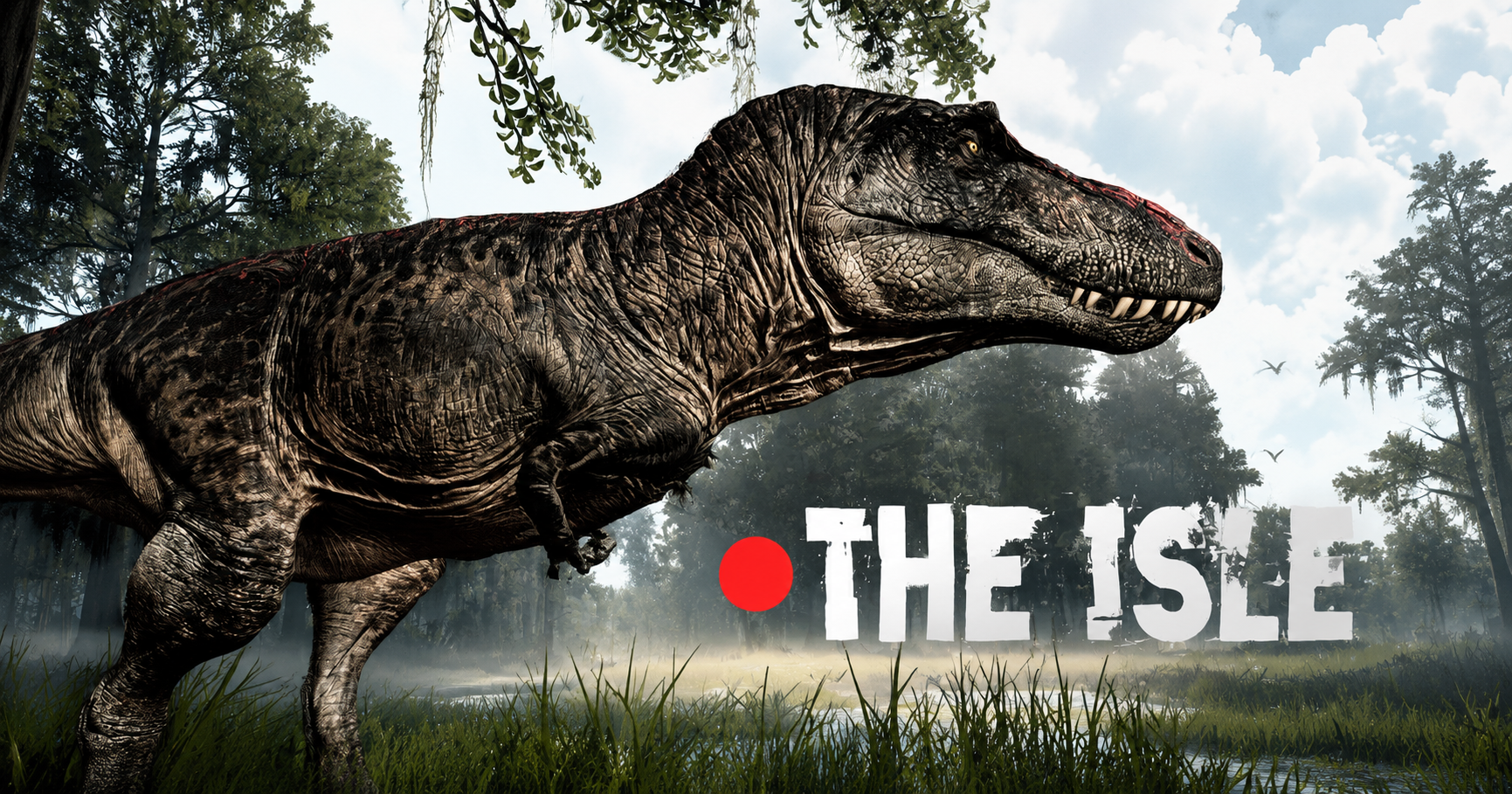
The Isle: Essential Tips & Guides for Smarter Survival, Faster Growth, and Better Dinosaur Gameplay
Introduction
Surviving in The Isle requires much more than knowing how to run, attack, or find food. Every dinosaur exists in an environment where resources are limited, predators can appear unexpectedly, and a single mistake can erase hours of growth. Players must understand their species, manage hunger and thirst, recognize environmental dangers, and make decisions based on their current condition. Even experienced players can lose an adult dinosaur if they become careless around water, underestimate an opponent, or travel too far without preparing an escape route.
The game's survival experience becomes especially challenging when players move beyond the early stages of growth. Juveniles must avoid larger creatures, subadults gradually develop their abilities, and adults need to balance their increased strength with the risks of fighting and defending territory. Meanwhile, the environment continues to create pressure through resource availability, visibility, terrain, and encounters with other players.
This guide focuses on practical tips and guides for The Isle: Evrima. It explains how to improve survival habits, choose efficient routes, manage nutrients, recognize threats, use stamina intelligently, fight more effectively, and cooperate with other dinosaurs. Rather than focusing on a general introduction, each section provides strategies that players can apply during actual Survival sessions.

1. Prepare Your Dinosaur Before Leaving the Spawn Area
One of the most common mistakes in The Isle is moving too quickly after spawning. Players often begin running toward the nearest landmark without checking their dinosaur's needs, abilities, or surroundings. This can create problems before they have established a reliable source of food or water. A better strategy is to spend the first few moments understanding the character and identifying a safe starting area.
Begin by checking your dinosaur's status, including hunger, thirst, stamina, health, growth, and diet information. These indicators help you decide what needs immediate attention. A dinosaur with low thirst should prioritize finding water, while one with sufficient resources can spend more time exploring. You should also understand whether your species depends on plants, meat, or other specific food sources before travelling too far.
Choose a dinosaur that matches your playstyle
Different species require different survival strategies. A small herbivore may depend on hiding and escaping, while a large carnivore may rely on hunting opportunities and careful stamina management. Choosing a dinosaur simply because it looks powerful can make your first experience unnecessarily difficult.
Consider these factors before selecting a species:
- Mobility: Can it escape quickly, turn efficiently, or navigate difficult terrain?
- Diet: Are its preferred food sources easy to locate?
- Growth: How long will it take to reach adulthood?
- Defense: Does it have useful defensive abilities or rely mainly on avoiding combat?
- Group potential: Does it benefit from travelling with compatible dinosaurs?
- Difficulty: Are its mechanics manageable for your current experience?
Establish a starting survival plan
Before travelling, identify at least one potential food source, one water source, and a location where you can rest without being completely exposed. These locations do not need to be far apart. In fact, keeping them relatively close together can reduce unnecessary travel and help you maintain a predictable routine.
A good starting plan should include an alternative destination. If another dinosaur occupies your preferred water source, you should already have an idea of where to go next. This simple preparation can prevent panic when the environment becomes dangerous.
2. Master Scent Tracking Instead of Wandering Randomly
Scent tracking is one of the most useful survival tools in Evrima. It allows players to gather information about nearby resources and environmental traces without relying entirely on visual searching. Under the default controls, pressing Q activates the scent function. Depending on the dinosaur, environment, and available resources, the system can help identify food, water, carcasses, blood, and other useful information.
The most important tip is to use scent before committing to a long journey. Running blindly through unfamiliar terrain wastes stamina and may lead you into dangerous areas. Instead, stop somewhere with reasonable cover, activate scent, and identify the nearest useful resource. Then examine the route before moving toward it.
Improve your scent-search routine
Scent should be treated as an information tool, not a guarantee that a resource is safe. A food indicator may lead to a carcass surrounded by predators, while a water source may be occupied by a dangerous aquatic dinosaur. Always combine scent information with observation and sound.
Use this routine:
- Stop in a location where you are not immediately exposed.
- Activate scent and identify useful indicators.
- Determine which resources match your dinosaur's diet.
- Check the surrounding terrain before approaching.
- Move toward the resource without wasting stamina.
- Recheck the area before eating or drinking.
Learn to interpret information correctly
Herbivores and carnivores have different resource requirements, so the indicators that matter to one species may not be useful to another. Herbivores should focus on appropriate vegetation and dietary nutrients, while carnivores should learn how to locate suitable meat sources and follow relevant traces.
Avoid depending on scent alone
Scent does not replace map knowledge. It may help you identify a nearby resource, but it cannot reliably tell you whether another player is hiding nearby or whether a route is safe. Use landmarks, vegetation, terrain, and audio cues to build a more complete understanding of the environment.
3. Optimize Your Diet for Better Growth
Eating is essential, but simply filling the hunger bar is not the most efficient way to develop your dinosaur. Evrima includes a nutrient system involving proteins, lipids, and carbohydrates. Different species have preferred food sources, and maintaining a suitable balance can improve growth compared with relying on a single type of food.
Players should check the diet information for their current species rather than assuming that every edible item provides the same benefits. A carnivore may need to find different types of prey or meat sources, while an herbivore must identify suitable plants. The ideal combination depends on the species and the food available in the surrounding area.
Prioritize survival before perfect nutrients
A common mistake is travelling too far in search of a perfect diet while hunger is already becoming dangerous. Nutrient balance is important, but it should not come at the cost of basic survival. If a safe food source is nearby, use it to maintain your condition before searching for additional nutrients.
A practical priority system is:
- Keep hunger at a manageable level.
- Find food that matches your species' dietary requirements.
- Improve nutrient balance when safe opportunities appear.
- Avoid unnecessary travel for a single missing nutrient.
- Check your diet status regularly instead of guessing.
Create an efficient feeding route
Rather than searching randomly every time hunger increases, learn the locations of several useful food sources. A route that connects multiple resources is more efficient than repeatedly travelling to one distant location. It also provides alternatives if another dinosaur occupies a preferred feeding area.
Do not confuse a full stomach with a perfect diet
Your dinosaur may have enough food to survive while still lacking important nutrients. Check the diet indicators to understand what is missing. Once you know which nutrient category needs attention, look for an appropriate food source without ignoring nearby dangers.
4. Drink Water Safely and Avoid Ambush Locations
Water is essential, but rivers and lakes are among the most dangerous places in The Isle. Many dinosaurs need to visit the same water sources, which creates opportunities for predators to ambush thirsty animals. Deinosuchus is a particularly dangerous example because it can remain concealed in water and attack creatures approaching the shoreline.
The safest approach is to treat every water source as a potential threat area. Do not run directly toward the nearest water indicator and begin drinking immediately. Stop at a distance, observe the surface, listen for movement, and identify a route that allows you to retreat. A few seconds of observation can prevent the loss of a fully grown dinosaur.
Follow a safer drinking method
When approaching water, use the terrain to your advantage. Vegetation and rocks may provide cover, while shallow sections can sometimes offer a more manageable approach than deep riverbanks. However, cover does not guarantee safety, and players should remain alert throughout the interaction.
Use these precautions:
- Check the water surface before approaching.
- Listen for unusual movement or nearby calls.
- Avoid standing in exposed areas for extended periods.
- Keep an escape route available.
- Do not assume that a quiet river is completely safe.
- Leave the shoreline after drinking instead of resting beside it.
Understand the difference between drinking and swimming
A dinosaur that can drink safely from the edge may not be able to cross the river without risk. Swimming ability varies between species, and entering deep water can create problems with stamina, movement, and escape options.
Before crossing, consider the distance, depth, available exits, and possibility of aquatic predators. If you cannot identify a safe route, find another crossing point or travel along the bank. Saving a little time is not worth risking hours of growth.
5. Manage Stamina and Movement More Intelligently
Stamina management is one of the most important skills for surviving encounters. Players who constantly sprint may reach a destination quickly, but they can become vulnerable when a predator appears. Without sufficient stamina, escaping becomes difficult, and even a dinosaur with strong combat abilities may struggle to defend itself.
The key is to use movement according to the situation. Walking is often sufficient when travelling through familiar and relatively safe terrain. Sprinting should be reserved for situations where speed provides a clear advantage, such as escaping an attacker, crossing an exposed area, or pursuing prey when the opportunity is favorable.
Use different movement speeds strategically
Walking: Best for conserving stamina during routine travel and reducing unnecessary movement.
Sprinting: Useful for escaping danger, chasing prey, or moving quickly through exposed areas.
Crouching: Helps reduce your profile and may make it easier to remain concealed, depending on the species and environment.
Resting: Allows recovery when you are in a safe position and do not need to move immediately.
Avoid exhausting yourself before an encounter
Before entering an unfamiliar area, make sure you have enough stamina to respond if something approaches. Do not spend all your energy sprinting toward a food source, then remain unable to escape when another dinosaur appears.
A good movement routine is to travel at a controlled pace, stop when necessary, and recover stamina in a protected location. If you hear suspicious sounds, avoid continuing blindly. Assess the situation before deciding whether to run, hide, or change direction.
Learn how your species uses stamina
Different dinosaurs have different stamina demands and movement capabilities. A fast species may be able to escape many threats, while a heavier creature may rely more on positioning and defensive abilities. Learn the limits of your dinosaur instead of copying the movement habits of another species.

6. Use Terrain, Weather, and Visibility to Your Advantage
The environment is not simply a background. Terrain, vegetation, visibility, and weather can influence how easily players detect one another and how safely dinosaurs move through the world. A forest may provide cover, but it can also restrict visibility. Open fields offer better sightlines, but they make it easier for predators to spot smaller creatures.
The best route depends on your current dinosaur and objective. A small herbivore may benefit from moving through vegetation and avoiding open ground, while a large predator may prefer locations that provide opportunities to approach prey without being noticed. Players should learn to evaluate an area before entering rather than assuming that one type of terrain is always safe.
Choose routes based on your dinosaur
Consider the following environmental advantages:
- Dense vegetation: Useful for concealment, especially for smaller dinosaurs.
- Rock formations: Can provide visual cover and restrict approach angles.
- Open terrain: Makes it easier to observe distant movement but increases exposure.
- Elevated ground: May improve visibility and help identify approaching threats.
- Water edges: Provide essential resources but can create ambush risks.
- Narrow passages: Restrict movement and may make escaping difficult.
Use sound as an additional warning system
Visual observation is not enough. Footsteps, calls, growls, and other sounds can reveal nearby dinosaurs before they become visible. Lower your movement speed when you hear something unusual and avoid making unnecessary noise.
Avoid predictable travel patterns
If you repeatedly use the same path between a water source and feeding area, other players may begin to recognize your movement. Change routes when the area becomes crowded or dangerous. This makes your behavior less predictable and gives you more opportunities to avoid encounters.
7. Improve Combat Skills and Understand When to Retreat
Combat in The Isle is not simply about attacking as quickly as possible. Successful fights depend on positioning, stamina, timing, species abilities, and knowledge of the opponent. A dinosaur with more health or stronger attacks does not automatically win if it is poorly positioned or exhausted.
Before fighting, evaluate whether the encounter is necessary. Smaller dinosaurs often have better chances of survival by escaping rather than challenging larger predators. Even adult dinosaurs should avoid unnecessary fights because injuries can make them vulnerable to additional threats. A fight that begins as a small confrontation can quickly become a dangerous situation if another player joins.
Learn your dinosaur's attacks
Every species has its own strengths and limitations. Some rely on powerful bites, others use defensive attacks, and certain dinosaurs have specialized abilities such as pouncing or grappling. Learn the range and timing of your attacks before entering a serious fight.
Practice the following:
- Understand which attack is most effective for your species.
- Learn how much stamina each ability consumes.
- Avoid attacking repeatedly without considering positioning.
- Watch the opponent's movement and turning speed.
- Use terrain to reduce the opponent's advantage.
- Retreat when your health or stamina becomes too low.
Positioning is often more important than aggression
Do not allow an opponent to control the direction of the fight. Maintain enough space to turn, avoid attacks, and move toward a safer area. When fighting a larger dinosaur, direct confrontation may be a poor decision. Look for opportunities to disengage instead of trying to prove that your creature can defeat everything.
Recognize when a fight is lost
If you are badly injured, exhausted, or trapped in unfavorable terrain, continuing the fight may only make the situation worse. Retreat when possible, find cover, and recover. Surviving an encounter is often a better result than defeating an opponent at the cost of your character.
8. Build Better Group Strategies and Communicate Effectively
Playing with other dinosaurs can improve survival, especially for species that benefit from group protection or coordinated hunting. A herd can detect threats earlier, while a carnivore pack may have better opportunities to pursue prey. However, groups also introduce challenges: members may move at different speeds, compete for food, or attract attention through repeated calls.
Choose companions carefully and understand the server's grouping rules. Not every species can form a valid group, and community servers may have additional restrictions. A group should have a clear purpose rather than simply collecting as many players as possible.
Establish simple communication rules
Calls can help members identify one another, communicate danger, or coordinate movement. However, excessive calling may reveal your location to nearby predators. Use communication when it provides useful information rather than making noise continuously.
A reliable group should:
- Agree on a meeting location.
- Stay within a reasonable distance of one another.
- Warn members when a threat is detected.
- Avoid leaving juveniles behind.
- Share information about nearby resources.
- Establish a retreat direction before entering dangerous areas.
Match the group's movement to its weakest member
A group is only as organized as its ability to stay together. Larger dinosaurs may move differently from smaller companions, while juveniles may struggle to keep up during long journeys. Do not force the entire group to travel at the speed of its strongest member.
Be careful when meeting strangers
Not every dinosaur that approaches your group is friendly. Some players may be looking for food, while others may attack when they see an opportunity. Observe their behavior and maintain enough distance to respond if they become aggressive.
9. Recover From Injuries and Protect Your Growth Progress
Injuries can turn a successful encounter into a long-term survival problem. Depending on the attack and species, damage may involve bleeding, fractures, reduced mobility, or other negative effects. Players who ignore these conditions may discover that their dinosaur cannot escape the next threat.
After combat, do not immediately continue travelling as if nothing happened. Check your health and status indicators, find a safe place, and understand what recovery is required. Avoid resting in exposed locations, especially near water or popular feeding areas. A wounded dinosaur is an attractive target because it may have difficulty escaping.
Make recovery part of your survival routine
Once you are away from danger, assess the situation:
- Check your health and injury indicators.
- Move away from the location where the fight occurred.
- Find cover with a clear view of nearby approaches.
- Rest or recover according to your dinosaur's needs.
- Avoid further combat until you are ready.
- Reassess your food, water, and stamina before travelling.
Protect growth by avoiding unnecessary risks
The time invested in growing a dinosaur makes survival decisions especially important. A player who repeatedly fights over small amounts of food may lose more progress than they gain. It is often better to leave a contested resource and find another one than to risk an entire character.
Learn from every death
When a dinosaur dies, think about what caused the loss. Was the water source unsafe? Did you run out of stamina? Did you travel too far from food? Did you fight an opponent without understanding its abilities? Identifying the cause helps you avoid repeating the same mistake in your next life.
10. Develop Advanced Survival Habits Through Practice
Once you understand the basic mechanics, the next step is to combine them into a consistent survival routine. Experienced players do not rely on one trick. They constantly evaluate their surroundings, monitor resources, understand their species, and adapt when conditions change. This makes survival more reliable even when the server is crowded or an unexpected encounter occurs.
One of the best ways to improve is to focus on a single skill during each session. You might spend one life learning the map, another practicing combat, and another understanding the diet system. Trying to master everything at once can make progress difficult to measure. Concentrated practice helps you identify which decisions are working and which habits need improvement.
Use a repeatable survival checklist
Before travelling:
- Check hunger, thirst, health, and stamina.
- Review your dinosaur's diet and growth.
- Identify the nearest useful resource.
- Choose a route with cover.
- Listen for nearby threats.
During travel:
- Avoid sprinting without a reason.
- Use scent to locate resources.
- Reassess the route when danger appears.
- Keep an escape option available.
- Avoid unnecessary fights.
After an encounter:
- Check for injuries.
- Move to a safer location.
- Recover before travelling again.
- Review what caused the encounter.
- Adjust your next decision accordingly.
Practice in lower-risk situations
If you are unfamiliar with a species, use Sandbox or other low-risk opportunities to learn its movement and abilities. Test turning, attack range, stamina use, and special mechanics before depending on them in Survival. This is especially useful for dinosaurs with complex abilities that require precise timing.

Keep up with game updates
The Isle is actively developed, and Evrima mechanics can change through updates. Species abilities, growth systems, food availability, and map details may be adjusted. When a familiar strategy stops working, check the current patch notes and test the relevant mechanic rather than assuming that older guides remain completely accurate.