
Celeste Lets You Cheat, and That’s the Whole Point: Why the Best Hard Game Ever Made Is Secretly About Kindness

A game that wants to be taken seriously as a test of skill does not usually include a menu that lets you turn the test off. Celeste does, and it does so without apology, without a disapproving tone, and without a single achievement withheld as punishment. Open the pause screen at any time and you can slow the game down, grant yourself invincibility, give Madeline infinite stamina, or add extra dashes to her repertoire. The first time you notice this, it feels almost like a mistake, as though the developers forgot that a platformer is supposed to be a gauntlet. By the end, it feels like the most important design decision in the entire game. Celeste is a brutal, precise, uncompromising game about climbing a mountain, and it is also a game that quietly insists you are allowed to ask for help.
That combination, hardness and generosity at the same time, is the thing that makes Celeste more than a very good platformer. It was released in January 2018 by Maddy Thorson and Noel Berry, built from a four-day game jam prototype on the PICO-8 fantasy console into a full adventure with eight chapters, and a free expansion called Farewell arrived in September 2019. It has since sold more than a million copies, accumulated a devoted community of speedrunners and modders, and become one of those rare games that people recommend to friends who do not play games. The usual explanation for that reach is the combination of tight controls, lovely pixel art, and Lena Raine’s score. All of that is true. But the real reason Celeste lingers is that its difficulty and its story are the same thing, and that its kindness is built into the structure rather than appended as a feature.
A Mountain That Is Also a Mind
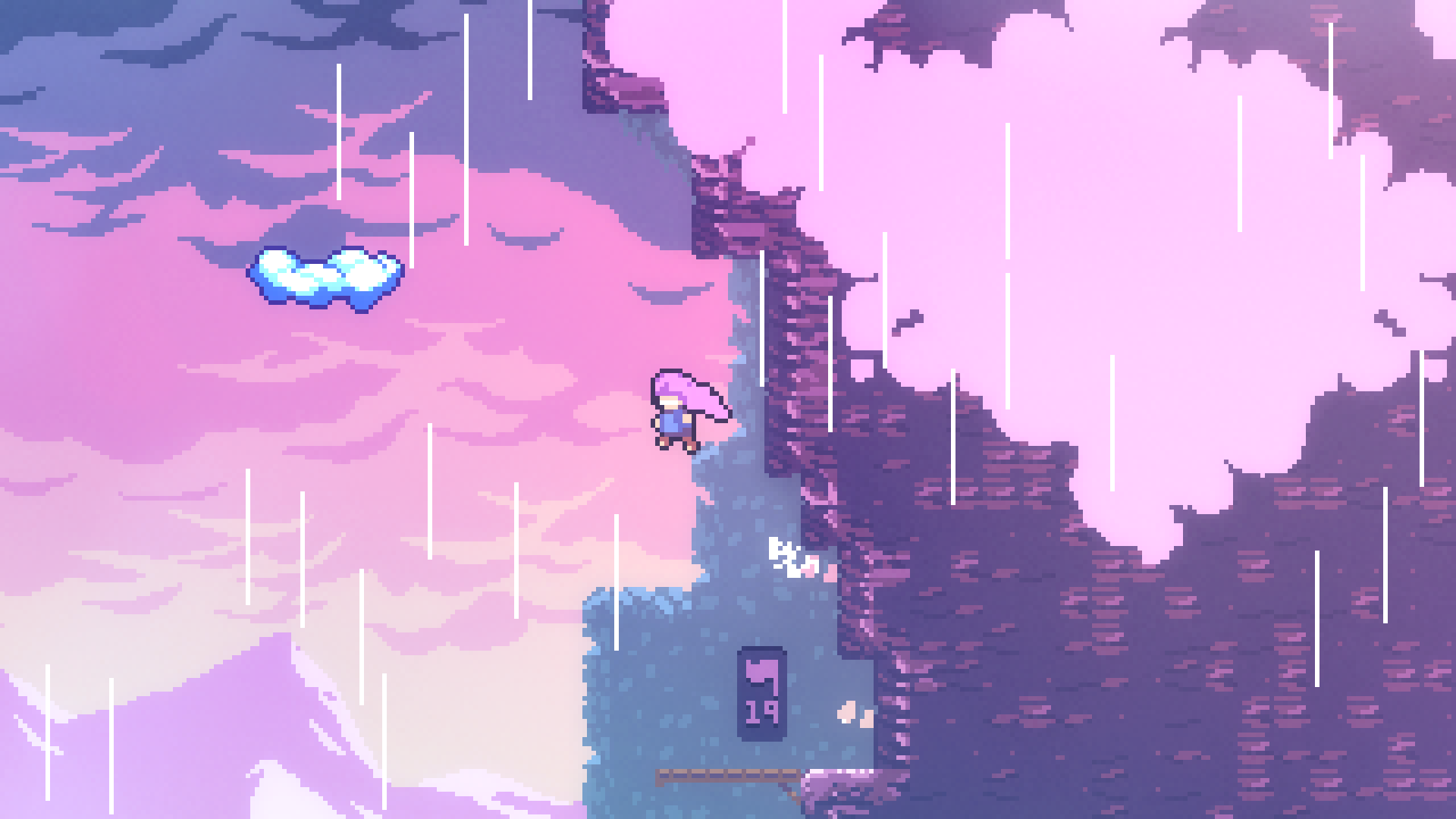
The setup is simple enough to fit on a postcard. Madeline, a young woman struggling with anxiety and depression, decides to climb Celeste Mountain. That is the whole premise, and the game never needs more. Each chapter presents a new region of the mountain with its own obstacles, its own rules, and its own cast of strange, funny, and sometimes unsettling inhabitants. The landscape is rendered in a crisp, colorful pixel style that makes every screen feel like a small painting, and every chapter introduces a new mechanical idea that remixes the same core moves.
Those core moves are the heart of the game. Madeline can run, jump, climb walls for a limited time, and perform a single dash in any of eight directions, a dash that refreshes only when she lands on solid ground or touches a floating crystal. That is the entire vocabulary. There are no weapons, no inventory, no skill trees. Everything the game asks of you, from simple hops to sequences that require split-second precision across a dozen screens, is built from that handful of verbs.
What makes this elegant is how completely the mechanic expresses the theme. A dash that you have only once, that you must use carefully, that you can only recover by touching the ground or finding a lifeline, is a perfect small model of what it feels like to live with anxiety. You have limited energy. You must spend it wisely. You cannot simply push through every problem at once, and when you run out, you have to stop, breathe, and reset. The game never says this out loud, but the fingers on the controller understand it long before the mind catches up.
Death Is Cheap, and That Is a Kindness
The second structural decision that shapes the whole experience is the way the game handles failure. In Celeste you die constantly. You fall into pits, brush against spikes, miss a dash by a pixel, and each time you are returned to the start of the screen almost instantly, with no loading, no penalty, and no ceremony. A small counter in the corner tracks the number of deaths, and the game encourages you to treat that number not as a score of shame but as a record of effort.
This is a deceptively radical choice. Many difficult games punish failure by taking something from you: progress, resources, time. Celeste takes nothing. The cost of trying again is a fraction of a second, and the screen waits for you exactly as you left it. The effect is that the player feels invited to experiment, to fail, and to learn, because failure is not expensive. A challenge that might feel crushing in another game becomes, in Celeste, a puzzle you can attack twenty times in a row without discouragement.
That generosity also reshapes how the difficulty feels. A section that requires fifty attempts is not a wall but a process, a rhythm of small improvements. You discover that a sequence of dashes you could not complete ten minutes ago has become automatic, and the satisfaction of that shift is among the most reliable pleasures the game offers. It is the feeling of getting better at something difficult through patient repetition, and Celeste is built to deliver it as often as possible.
The Voice in the Mirror
The narrative takes this idea further in a way that is best left lightly described, since discovering it is part of the experience. Partway up the mountain, Madeline encounters a darker reflection of herself, a figure who embodies her fears, her doubts, and her urge to give up. The game stages this confrontation as both a story beat and a mechanical challenge, and the way it resolves is the emotional center of the whole experience.
What is notable is that the story does not treat anxiety as an enemy to be defeated. The resolution is not triumph over a villain but a kind of reconciliation, an acceptance that the frightened parts of oneself are not obstacles to be destroyed but companions to be understood. It is a surprisingly mature and gentle message for a game that is, on the surface, about leaping between platforms, and it lands because the mechanics have been preparing the player for it all along.
The supporting cast reinforces this tone. A friendly fellow climber who offers encouragement and a bit of comic relief. A grumpy old woman at the base of the mountain who dispenses tough love. A melancholy ghost who is stuck in a loop of his own making. Each of them reflects a different way of relating to struggle, and each offers Madeline something, whether advice, company, or a moment of recognition. One scene, in which a companion helps Madeline through a panic attack by guiding her breathing, has become one of the most discussed moments in modern games, precisely because it treats the experience with such quiet accuracy and care.
Assist Mode and the Ethics of Difficulty
Which brings us back to the option that opened this review. Assist Mode is customizable. You can adjust the game’s speed in small increments, give Madeline unlimited stamina, grant her extra dashes, or make her invincible, and you can combine these options however you like. The game does not scold you for using them, does not lock you out of achievements, and does not label you with a badge of shame. The only comment it makes is a short message, tucked into the menu, reminding you that the game is meant to be enjoyed and that you are free to adjust it to your needs.

This is a profound design statement. The conventional wisdom in difficult games is that the challenge is the point, and that softening it betrays the experience. Celeste takes the opposite view: that the point is the journey, and that the challenge exists to serve it, not to gatekeep it. A player who uses Assist Mode to see the end of the story has not cheated. They have experienced the game in a way that suits them, and the developers have made clear that this is a legitimate and welcome way to play.
There is also a quieter effect that even players who never touch the menu feel. Knowing that the option exists changes how you experience the difficulty. The challenge feels less like a test you might fail and more like a conversation you are free to continue or pause. The presence of the safety net, even unused, tells you that the game is on your side. It is hard to overstate how rare and valuable that feeling is in a medium that has long equated difficulty with disrespect for the player.
The ethics of the choice also extend to how the game talks about itself. Thorson has described the work as connected to deeply personal themes of identity, anxiety, and self-acceptance, and the willingness to offer an assist mode reflects the same values that animate the story: that struggle is real, that help is acceptable, and that nobody should be shamed for needing it.
The Hidden Layer for Those Who Want More
For players who crave harder challenges, the game has them in abundance. Scattered throughout each chapter are optional strawberries, collectibles that require more daring routes and more precise execution. They have no effect on the story, and yet collecting them is one of the most compelling reasons to explore each screen thoroughly. Beyond them lie the B-Sides, remixed and significantly harder versions of each chapter, and the C-Sides, short, brutal gauntlets that test everything the game has taught you. These optional layers are not mandatory, but they offer a long, demanding path for those who want to push their skills to the limit.
The Farewell chapter, released as a free expansion, sits at the top of that ladder. It adds a hundred new screens and a final narrative epilogue, and it introduces new movement techniques that demand a deeper mastery of the game’s systems. It is difficult, sprawling, and emotionally resonant, and it serves as a fitting capstone for those who have fully absorbed the game’s lessons.
The existence of this optional hardcore layer is what makes the Assist Mode philosophy work. Celeste does not lower its standards. It simply refuses to force them on everyone. A casual player can see the story, a perfectionist can pursue mastery, and both are respected equally. The game accommodates different relationships to challenge without judging any of them.
Where the Climb Gets Rocky
For all its virtues, Celeste is not without flaws, and an honest review should acknowledge a few. The first is that the precision demanded by some sections can be exhausting even for skilled players. A game built around exact timing and small margins for error can produce frustration, particularly in later chapters, where sequences require long strings of flawless inputs. The instant-respawn design softens this, but the emotional toll of repeated failure is real, and not every player will find the process enjoyable.
The second is that the game’s tone of gentle encouragement can occasionally feel at odds with its mechanical severity. A story about self-acceptance and kindness sits alongside levels designed to push your execution to its limit, and the tension between the two is not always fully resolved. Some players will feel the emotional message more strongly than others, and some may find the narrative a little too earnest or on the nose in places.
The third is length and scope. The main story can be completed in a relatively short time, and while the optional content adds considerable depth, players seeking a sprawling, content-heavy experience may find the core campaign brief. This is a deliberate choice, and the game’s compact structure is part of its strength, but it is worth knowing that Celeste is a tightly focused experience rather than an epic.
Finally, the limited vocabulary of the controls, elegant as it is, can feel restrictive to players who prefer more varied or open-ended mechanics. Celeste does a few things extraordinarily well, but it does not try to do everything, and those who want a broader range of abilities may find it narrow.
Who Should Play It, and How
A few practical thoughts for anyone considering the game:
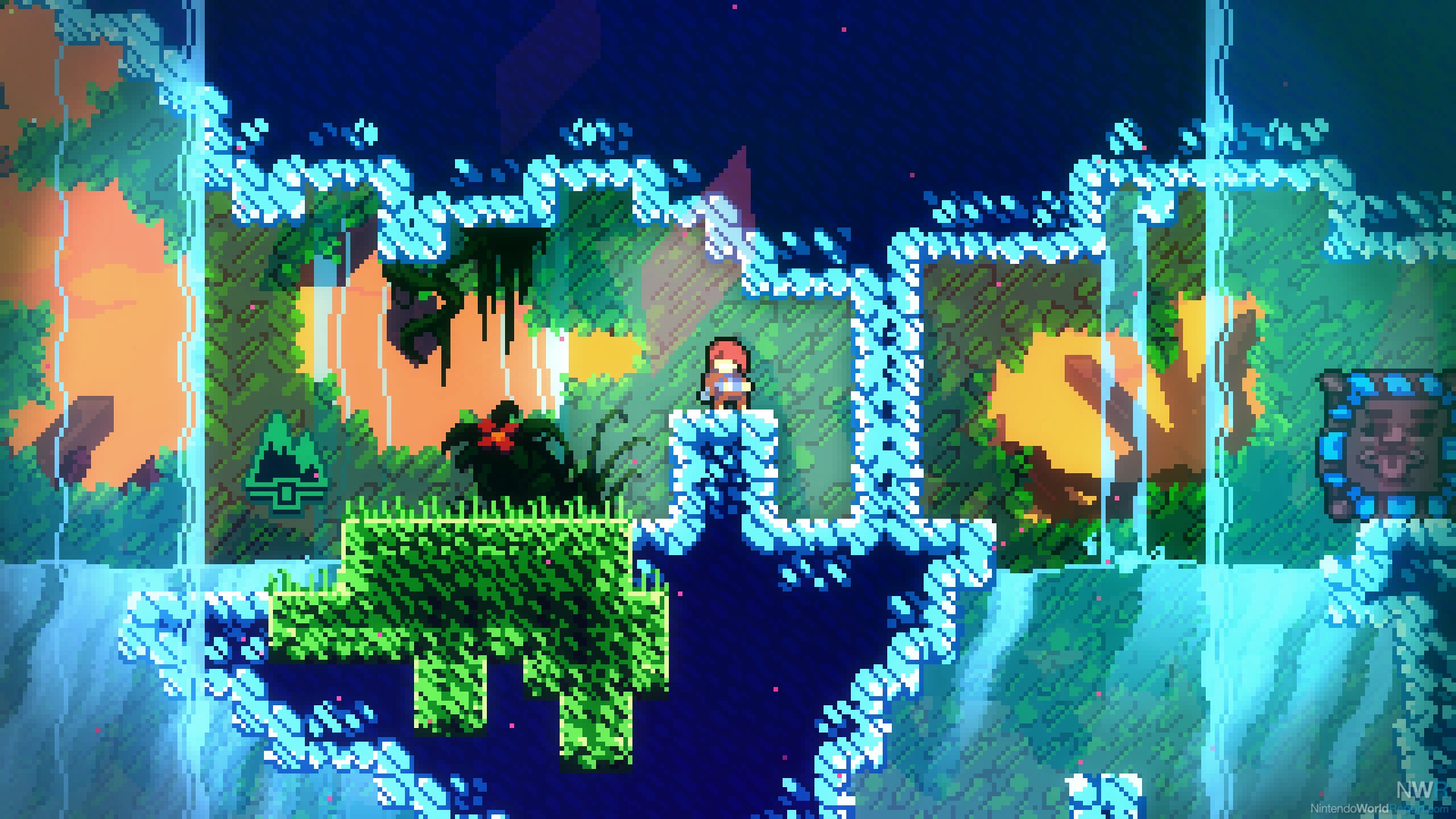
- If you love precision platformers, this is among the very best of the genre, with controls that feel exact and levels that reward careful practice.
- If you are intimidated by difficult games, try it anyway, and do not hesitate to use Assist Mode. The game is designed to welcome you, and the experience is worth having on your own terms.
- If you care about story and music, the writing is sincere and affecting, and the soundtrack is one of the most celebrated of its decade.
- If you want a deep challenge, the optional strawberries, B-Sides, C-Sides, and Farewell chapter offer many hours of demanding content.
- If you are looking for a short, complete experience, the main campaign is compact and satisfying, and it rewards a second playthrough.
The Verdict
Celeste is a game about climbing a mountain, and it is also a game about the strange, difficult, and ultimately rewarding process of being kind to yourself while doing something hard. Its mechanics are razor sharp, its art and music are gorgeous, and its story handles anxiety with a delicacy that few games attempt, let alone achieve. But what sets it apart is the way every part of the design points in the same direction. The limited dash, the instant respawns, the optional challenges, and the Assist Mode all say the same thing: that struggle is real, that persistence matters, and that you do not have to suffer alone.
It would be easy to praise Celeste simply as a difficult game done right. The truth is more interesting. It is a game that understands that difficulty is not the opposite of kindness, and that the best way to ask someone to climb a mountain is to make sure they know they can rest, slow down, or ask for help along the way. That is a lesson worth carrying far beyond the last screen, and it is the reason the game has stayed with so many people long after the summit.